
Hydrogen gets sold as the clean fuel of the future, and the pitch is easy to like. You burn it, or run it through a fuel cell, and what comes out is water. No carbon at the tailpipe. For a fuel operator who has spent a career moving diesel and gasoline, the question is simpler than the hype: is this a real product I might one day deliver, or a science project that stays five years away forever? The honest answer sits in between, and it depends almost entirely on details most of the marketing skips. Here is the plain version.
What hydrogen is as a transport fuel
Hydrogen is the lightest element, a gas that holds a lot of energy for its weight. As a fuel it gets used two ways. A few engines burn it the way they burn diesel. Far more common is the fuel cell, a device that combines hydrogen with oxygen from the air to make electricity on board the vehicle. Either way the exhaust is water vapor and not much else. That clean result is the whole reason anyone is interested. The catch, which we will get to, is that the hydrogen has to come from somewhere, and where it comes from decides how clean the fuel really is.
What a fuel cell vehicle actually is
A fuel cell vehicle, or FCEV, is an electric vehicle that carries hydrogen instead of a big battery. The fuel cell makes the electricity, the electricity spins an electric motor, and the wheels turn. So it drives like a battery EV. The difference shows up when it runs low. A battery truck plugs in and sits while it charges, sometimes for hours. An FCEV pulls up to a dispenser, takes on hydrogen in a few minutes, and gets back on the road. For a vehicle that earns money only while it moves, like a long-haul rig or a transit bus, that fast fill is the main draw. The trade is that the fuel itself is harder to make and harder to find than a wall socket.
How fueling works on the ground
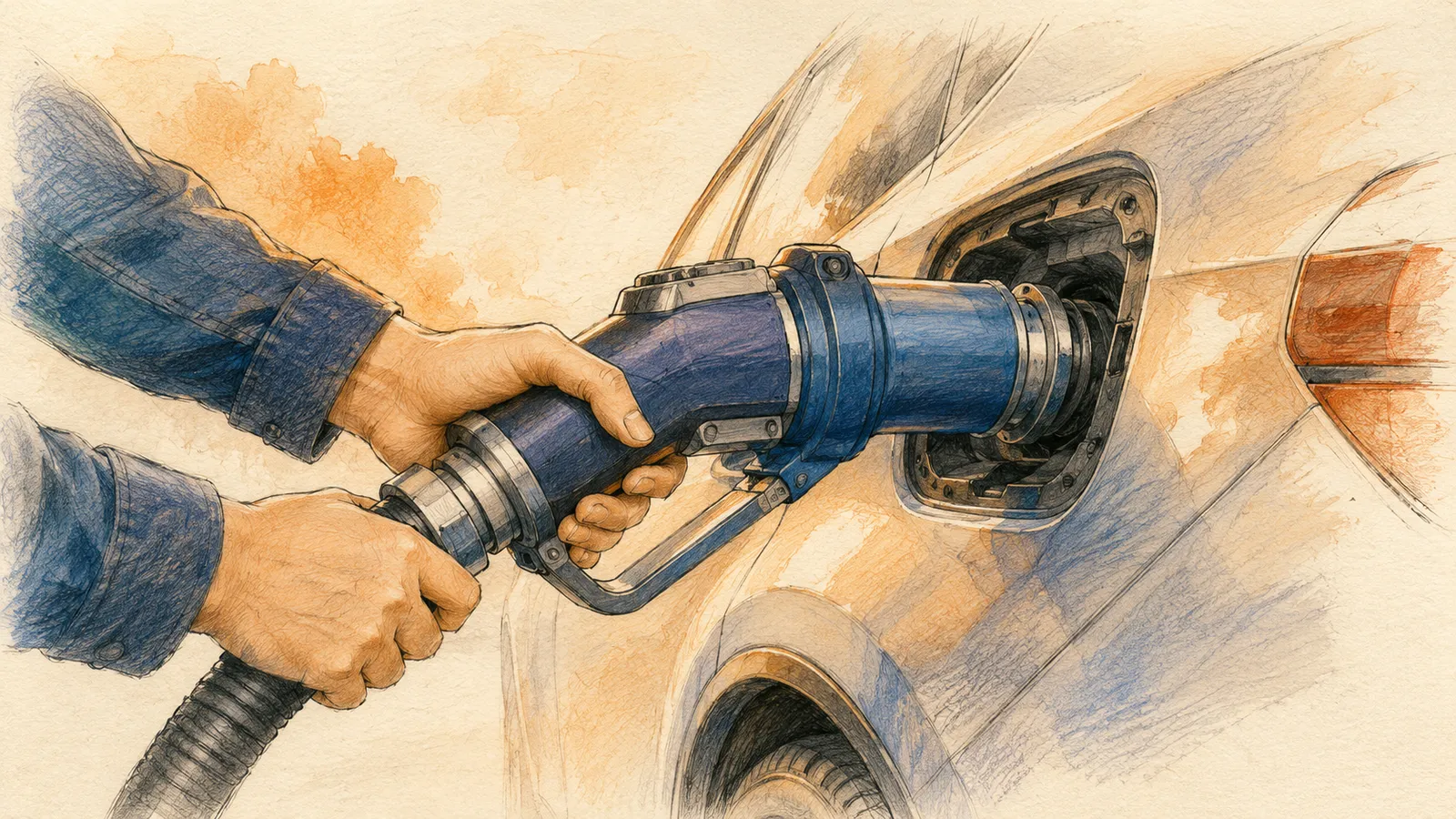
The act of fueling would feel familiar to anyone who has filled a truck. You pull up, pull a nozzle off the dispenser, lock it onto the receptacle, and the hydrogen flows. The numbers behind it are where it differs. Hydrogen for cars and light trucks is dispensed as a compressed gas at about 700 bar, which is roughly 10,000 pounds per square inch, far higher than the pressure in a propane or natural gas tank. A passenger car takes on something like 4 to 5 kilograms of hydrogen, and a typical fill runs about three to five minutes. Because squeezing gas in fast makes it hot, the dispenser chills the hydrogen to around 40 below before it goes in, so the tank fills quickly without overheating. None of that is visible to the driver. The pump does the work, the same way a modern fuel dispenser handles temperature and flow without anyone thinking about it.
How clean it is depends on how it is made
This is the part that decides everything, and it is the part the brochures rush past. Hydrogen does not come out of the ground ready to use. Somebody makes it, and there are two main ways, with very different carbon stories.
Grey hydrogen is made from natural gas, by a process called steam methane reforming. You heat natural gas with steam and split the hydrogen out. It is the cheapest method and most hydrogen made today is grey. The problem is the leftover carbon goes straight into the air, so the clean tailpipe hides a dirty source.
Blue hydrogen is the same natural gas process with carbon capture bolted on, so most of the carbon, often 70 to 90 percent, gets trapped instead of released. Cleaner than grey, and treated as a bridge while the next method scales up.
Green hydrogen is made by running electricity through water to split it into hydrogen and oxygen, a process called electrolysis. If that electricity comes from wind, solar, or other clean power, the whole fuel is close to carbon free. It is the cleanest option and the most expensive one, and the supply is still small. So when someone says hydrogen is clean, the fair reply is a question: which kind, made how? The color tells you the answer.
Where it honestly fits today
Strip away the future talk and hydrogen has found a few real homes. The clearest is material handling. Big warehouses run forklift fleets on fuel cells because a forklift can refuel in a couple of minutes and keep working three shifts, where a battery lift has to stop and charge. Companies like Walmart and Amazon run thousands of hydrogen forklifts in their distribution centers, fueled on site. The next is heavy trucking and fixed-route fleets, transit buses, drayage rigs running the same port loop, regional haulers that return to one depot every night. Those vehicles need fast fueling and long range, and they fuel in one or two known places, which sidesteps the need for a station on every corner. Light passenger cars are the weakest spot, for reasons the next section makes plain.
The near-term hurdles, stated plainly
Three things hold hydrogen back right now, and pretending otherwise helps nobody. First, there are almost no stations. Building one is expensive, and without vehicles the station loses money, while without stations nobody buys the vehicles. Second, the fuel is costly, both to make clean and to compress, chill, deliver, and store. Third, the retail side has been pulling back. In early 2024 Shell closed all seven of its light-duty hydrogen stations in California, the one state with a real passenger network, citing supply problems and cost. California has fallen far short of the station count it set out to build. That is a sober signal about hydrogen for everyday cars in the near term. The fleet and forklift uses, where fueling happens at a depot and not a public pump, are holding up better because they never depended on a retail network in the first place.
What it means for a fuel marketer now
For most operators the right move today is to watch, not to build. Hydrogen is an early product, and the volume that pays your bills will run on diesel and gasoline for years yet, the same way renewable diesel and biodiesel sit alongside the core barrel rather than replacing it. What makes hydrogen worth keeping an eye on is that it rhymes with the business you already know. It moves in bulk, gets delivered, gets stored, and gets dispensed at a station, so the logistics look more like fuel than charging does. If a fleet customer in your area pilots fuel cell trucks, or a warehouse goes to hydrogen forklifts, that is a conversation worth having early. The same forces that drive hydrogen also drive the credit programs you can earn on today, which is why it pays to understand how low-carbon fuel programs work before the question lands on your desk. Treat hydrogen as a coming product to track, price the real gallons you sell now with care, and you keep your options open without betting the business on a fuel the country has not finished building the road for.