
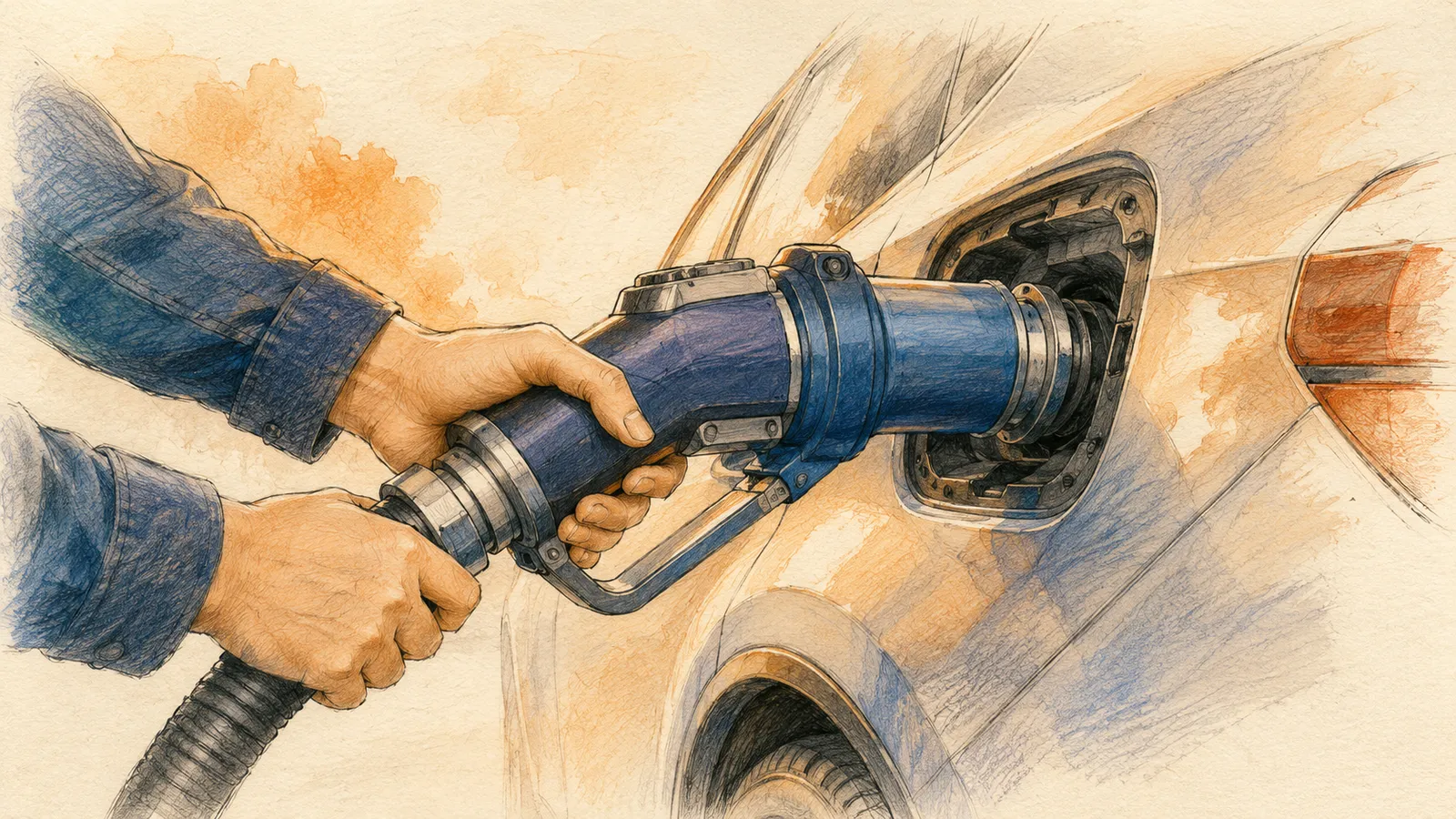
Hydrogen is the lightest and simplest element, used as a fuel that gives off only water when it is used. It powers fuel-cell vehicles and is an early, growing part of the fuel trade.
Hydrogen holds a lot of energy for its weight, and when it is used in a fuel cell the only thing out the tailpipe is water vapor. That clean result is the whole appeal. It is used most in fuel-cell trucks, buses, and cars, where the hydrogen makes electricity on board to run the motor.
It is handled as a gas and stored under very high pressure, much like compressed natural gas but at even higher pressures. It is dispensed at special stations built for it. Because that equipment is costly and still uncommon, hydrogen fueling is concentrated where there are enough vehicles to support it.
How clean hydrogen really is depends on how it was made. Splitting water with renewable electricity makes a very low-carbon fuel, while making it from natural gas is far less clean. The source decides its carbon score and what credits it can earn.
For a fuel marketer, hydrogen is an early-stage product. Most of the trade still runs on diesel, gasoline, and natural gas, but hydrogen is watched as a coming fuel for heavy transport, and some operators are positioning for it.
In useA regional truck fleet pilots a few hydrogen fuel-cell rigs, fueling them at one of the handful of high-pressure hydrogen stations along its route.
See also Compressed natural gas (CNG), Sustainable aviation fuel (SAF)