
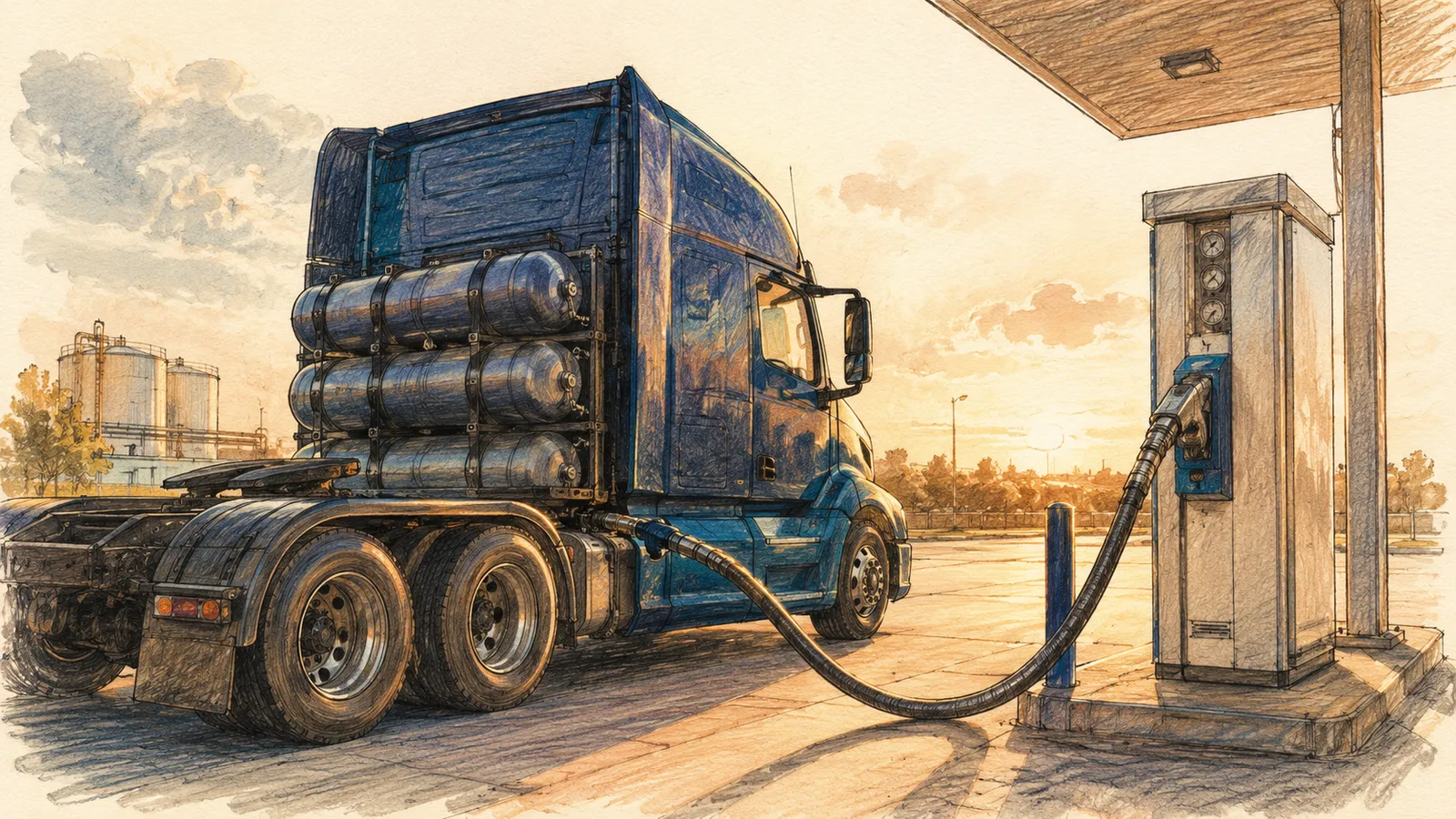
Compressed natural gas, or CNG, is ordinary natural gas squeezed under high pressure so enough of it fits in a tank to run a vehicle. It is the same gas that heats homes, just packed tight enough to carry on board.
Natural gas is very light, so at normal pressure a useful amount would never fit in a vehicle tank. Compressing it to high pressure shrinks it down until a tank holds enough to drive on. That compressed gas is CNG.
It runs trucks, transit buses, refuse trucks, and fleet cars, especially ones that return to the same yard each night where they can refuel. It is dispensed at special high-pressure stations, not at ordinary gasoline or diesel pumps, because the equipment has to handle that pressure safely.
CNG can be made from drilled natural gas or from renewable natural gas, the kind captured from landfills and dairies. The fuel in the tank is the same either way. The renewable version carries credits and a lower carbon score, which is often the reason a fleet chooses it.
For a fuel marketer, CNG is a different business from liquid fuel. It needs compression equipment and a high-pressure dispenser, and it suits committed fleet customers more than the walk-in public. But it serves accounts that want a cheaper or cleaner fuel than diesel.
In useThe city runs its buses on CNG, filling them overnight at a yard station, and switches the supply to renewable natural gas to lower the fleet’s carbon score.
Where the word comes from
The name is plain description: natural gas that has been compressed, squeezed under pressure, so it can be stored and used as a vehicle fuel.
See also Liquefied natural gas (LNG), Renewable natural gas (RNG)