
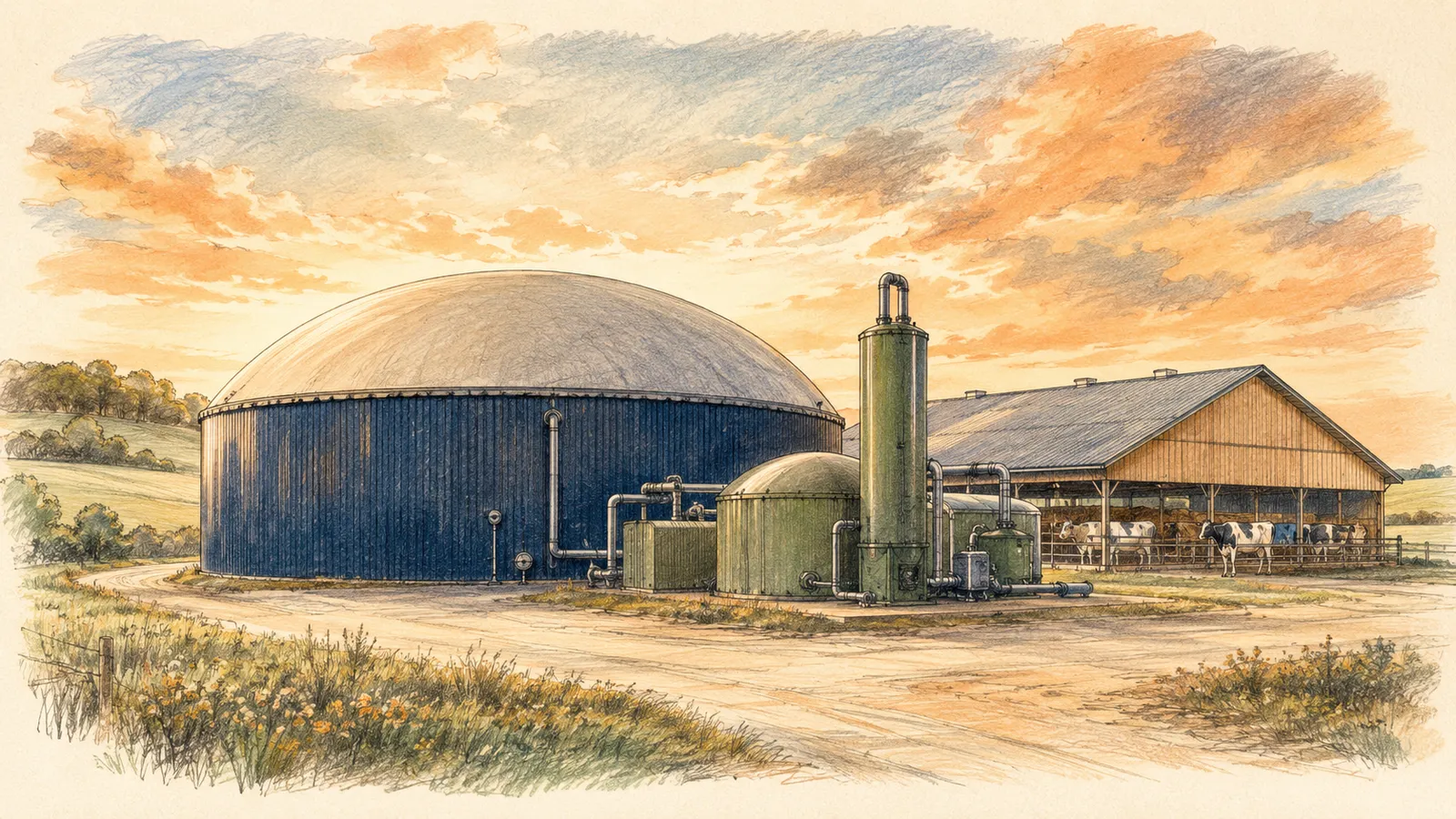
Renewable natural gas, or RNG, is pipeline-quality natural gas made from rotting organic matter instead of drilled from the ground. It is chemically the same as regular natural gas, so it runs the same engines, burners, and pipelines.
When organic matter rots without air, such as garbage in a landfill, manure at a dairy, or sludge at a wastewater plant, it gives off methane, the main ingredient in natural gas. RNG starts by capturing that methane. The raw gas it comes from is called biogas, and it is dirty, full of carbon dioxide and other junk.
To become RNG, that biogas is cleaned and concentrated until it matches the spec of ordinary pipeline natural gas. Once it passes, it can be piped, compressed, or chilled and used in any place regular natural gas goes, with no change to the equipment that burns it.
The appeal is that the methane would have escaped into the air anyway, where it is a strong climate-warming gas. Capturing it and burning it as fuel turns a waste problem into energy. That is why RNG earns credits under low-carbon fuel programs, which gives it a dollar value beyond the gas itself.
For a fuel marketer, RNG most often shows up as the renewable form of compressed or liquefied natural gas sold to fleets. It is the same product to deliver, but the paperwork tying it to its renewable source is what unlocks the credits.
In useA dairy captures the methane from its manure lagoon, cleans it up to RNG, and pipes it to a station that dispenses it as compressed natural gas to a city bus fleet.
Where the word comes from
Renewable natural gas spells out what it is: natural gas from a renewable source, the methane that organic matter keeps giving off, rather than a finite underground deposit.
See also Biogas, Compressed natural gas (CNG), Liquefied natural gas (LNG)