
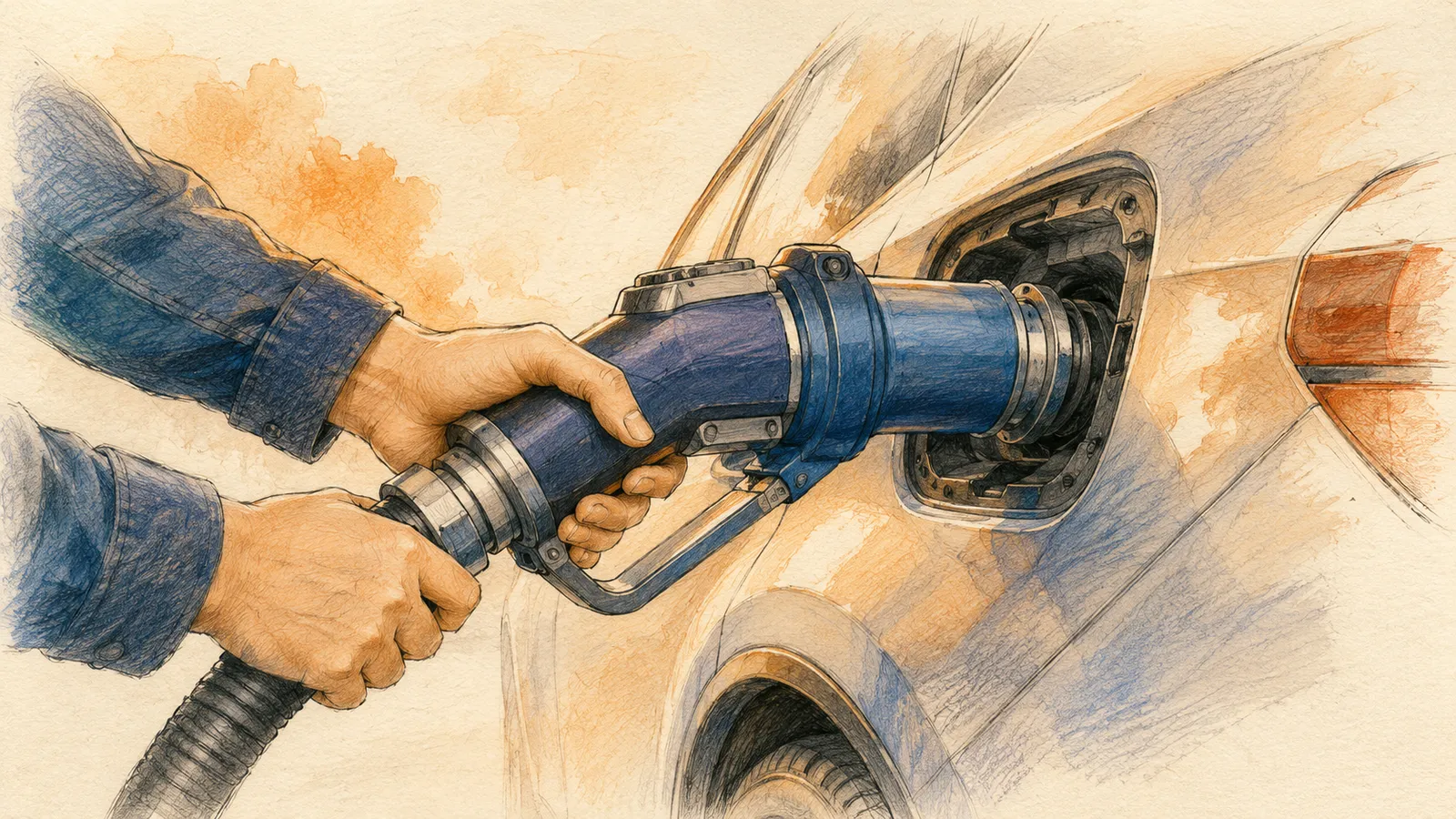
A fuel cell vehicle, or FCEV, runs on hydrogen and makes its own electricity onboard. It is an electric vehicle that carries hydrogen instead of a large battery.
At the heart of the vehicle is a fuel cell, a device that combines hydrogen from the tank with oxygen from the air. That reaction produces electricity, which drives an electric motor the same way a battery would. The only thing leaving the tailpipe is water.
The big difference from a battery EV is how it refills. You do not wait for a battery to charge. You pump hydrogen gas into a tank at a station, and it takes a few minutes, much like filling with gasoline. That fast refill is the main appeal, especially for trucks and fleets that cannot sit idle on a long charge.
The catch is that hydrogen has to be made, compressed, delivered, and stored, and the stations to do all that are still few. So fuel cell vehicles are most common today in fleets and regions that have built the supply to support them, rather than spread evenly across the country.
For a fuel marketer, hydrogen is a possible future product that looks more like the fuel trade than charging does. It still moves in bulk, gets delivered, and gets dispensed at a station, so the logistics rhyme with the business operators already know.
In useA hydrogen-powered transit bus pulls into the depot, refills its hydrogen tanks in minutes, and runs all day emitting nothing but water.
See also Electric vehicle (EV), Hydrogen, Gasoline gallon equivalent (GGE)