
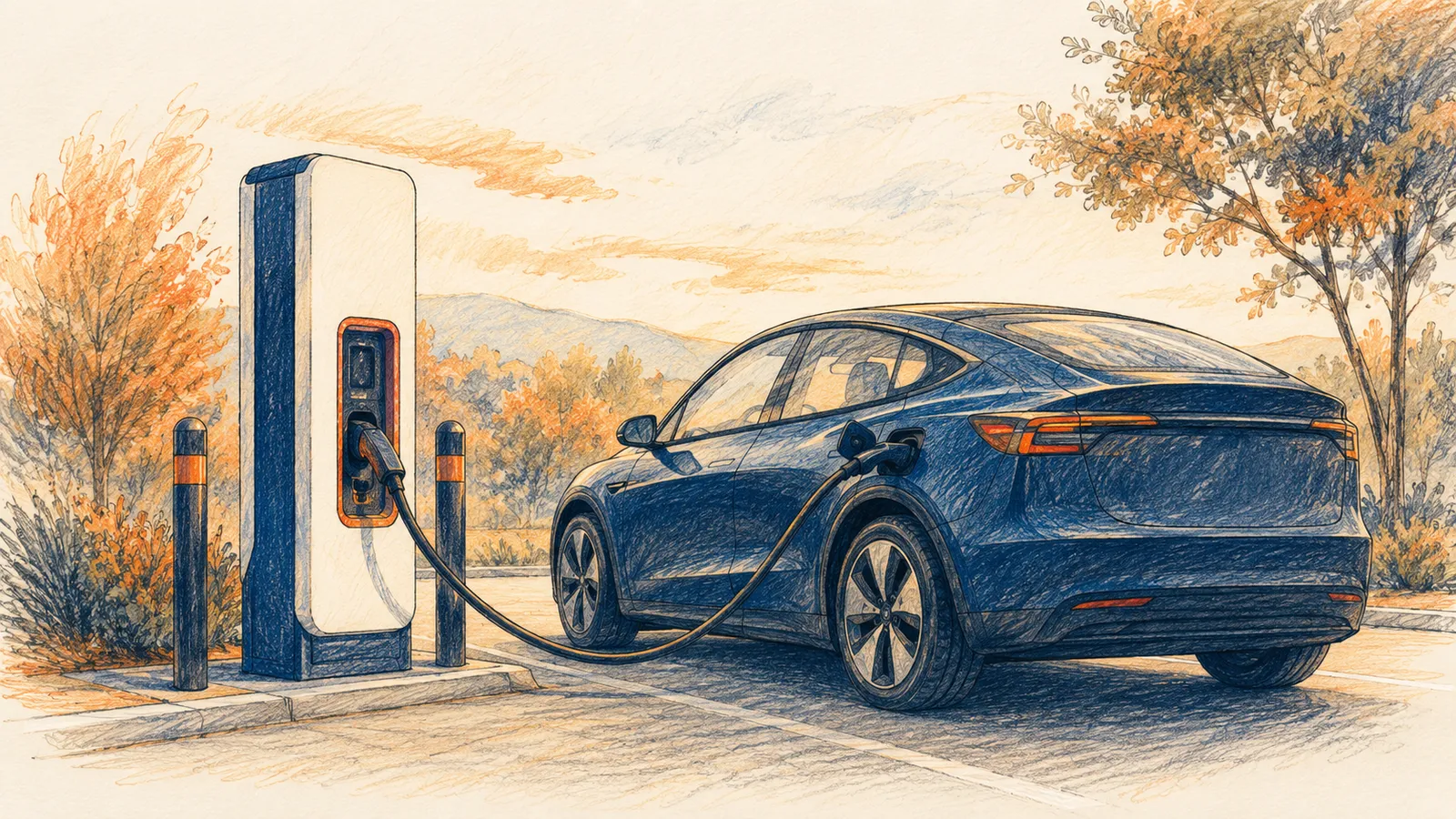
An electric vehicle, or EV, is a vehicle that runs on electricity stored in a battery rather than on fuel burned in an engine. You charge it by plugging it into the electric grid.
In a battery electric vehicle, called a BEV, an electric motor drives the wheels and a large battery holds the power. There is no gasoline engine and no tailpipe. You refill it by plugging into a charger, drawing electricity the way any appliance does, and the battery stores it until the motor needs it.
Two other kinds get lumped in with EVs, and they are worth keeping straight. A plug-in hybrid, or PHEV, has both a battery you charge from the grid and a gasoline engine. It runs on the battery for shorter trips and switches to gasoline for longer ones, so it never needs a charger to keep going. A plain hybrid, or HEV, has a battery too, but you cannot plug it in. The engine and the braking keep that battery charged, and it has no cord at all.
The line that matters to a fuel seller is the plug. A BEV buys no liquid fuel. A PHEV buys some. An HEV buys gasoline like any other car, just less of it. So the rise of EVs touches the fuel business by degree, not all at once.
For a fuel marketer or station operator, EVs are the slow shift in the ground under the trade. Charging is not the same business as selling fuel, with different equipment, different margins, and a customer who waits longer. Many operators watch it carefully, because where and how people refuel is the heart of the retail side.
In useA driver with a battery EV charges at home overnight and buys no gasoline, while a neighbor with a plug-in hybrid still fills up for the long drives the battery cannot cover.
See also Fuel cell vehicle (FCEV), DC fast charging, Gasoline gallon equivalent (GGE)