
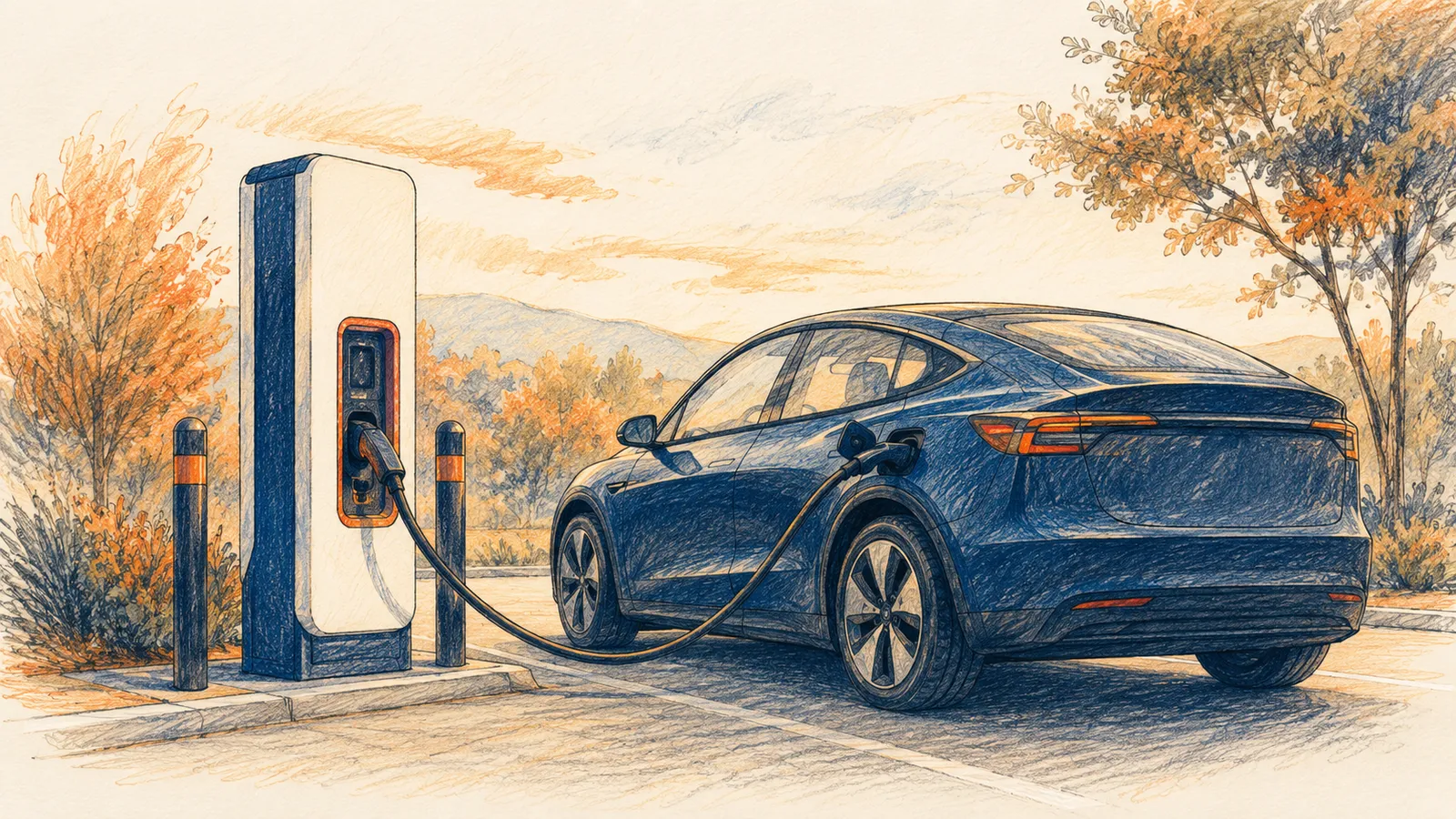
DC fast charging is high-power charging that fills an electric vehicle’s battery far faster than ordinary home or workplace charging. The DC stands for direct current.
Electric vehicle batteries store direct current, the steady one-way flow of electricity, while the grid delivers alternating current. Ordinary slower charging, called Level 2, feeds alternating current to the car and lets the car convert it, which is the slow part. A DC fast charger does that conversion in the charging unit itself and pushes direct current straight into the battery, skipping the slow step.
The result is speed. Where a Level 2 charger might take hours, a DC fast charger can add a large share of range in the time it takes to drink a coffee. The equipment is much bigger and costlier, and it draws a lot of power, so it shows up at highway stops and dedicated charging sites rather than in a home garage.
For a station operator, DC fast charging is the part of the EV world that most resembles a forecourt. A driver pulls in, refills, and leaves, the way a fuel customer does. The differences are the heavy electrical service it demands, the wait that is still longer than pumping fuel, and a margin model that works nothing like selling gallons.
In useOn a long highway trip the driver stops at a DC fast charger, adds most of the battery back in about twenty minutes, and is on the road again before the coffee cools.