
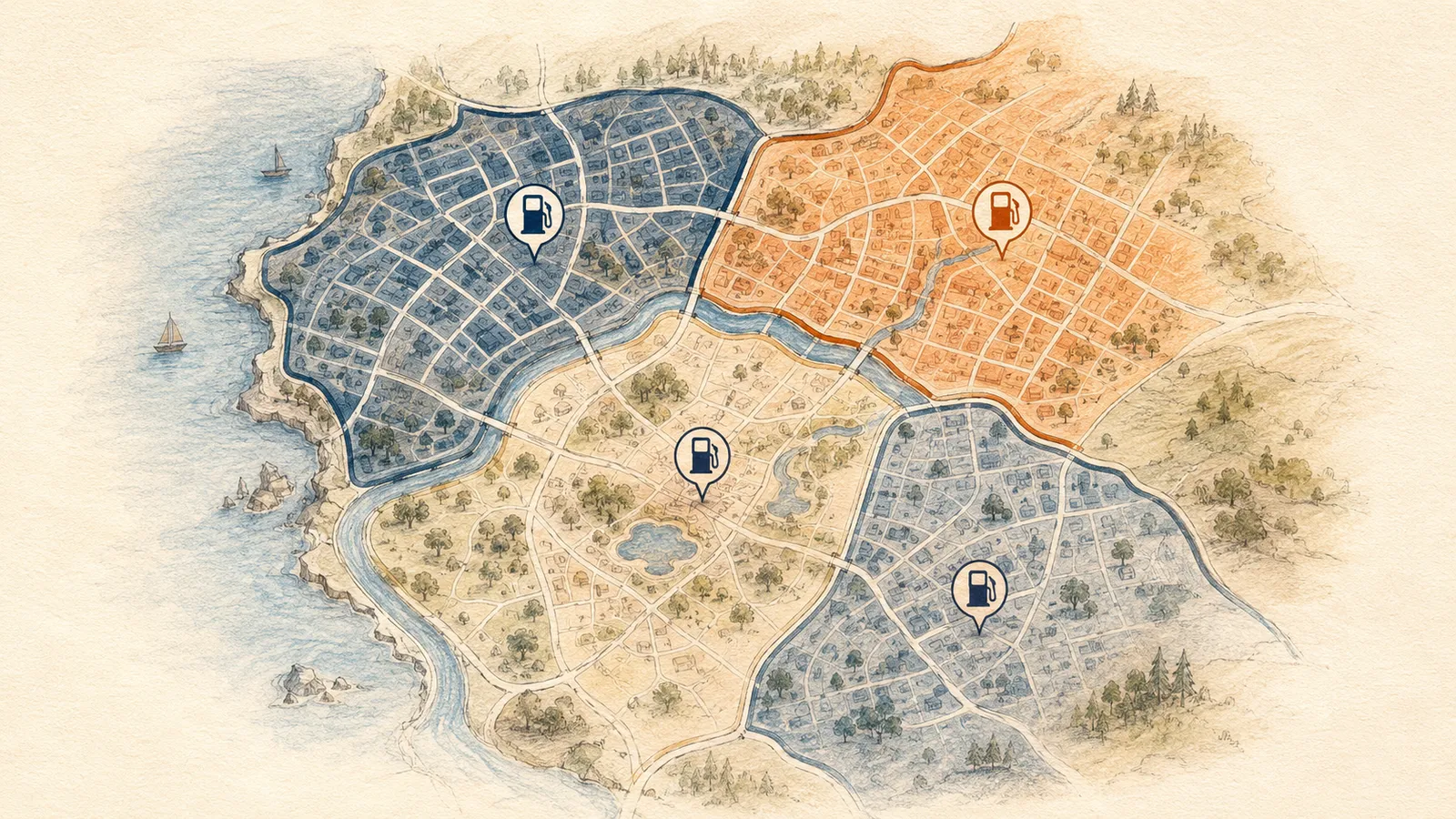
Zone pricing is charging different prices in different areas instead of one price everywhere. The price is set to match what each local market will bear.
A supplier or retailer divides its territory into zones and sets a separate price for each. Where competition is light and demand is strong, the price runs higher. Where the market is crowded and buyers have choices, it runs lower. Two stations only a few miles apart can pay different wholesale prices for the very same branded fuel because they sit in different zones.
On the wholesale side, this shows up most in dealer tank wagon pricing, the delivered price a refiner charges its branded dealers. The refiner draws the zones and sets each one’s number based on local conditions. The dealer usually has little say in which zone it lands in.
It matters because the zone can decide whether a site competes or struggles. A dealer stuck in a high-priced zone carries a higher cost than a rival down the road, and that gap comes straight out of the margin or the pump price. Understanding your zone, and pushing back when it looks wrong, is part of protecting the bottom line.
In useTwo branded dealers ten miles apart pay different DTW prices because the refiner placed them in separate zones, and the one in the high zone fights to keep its margin.
See also Dealer tank wagon (DTW), Rack price, Dealer