
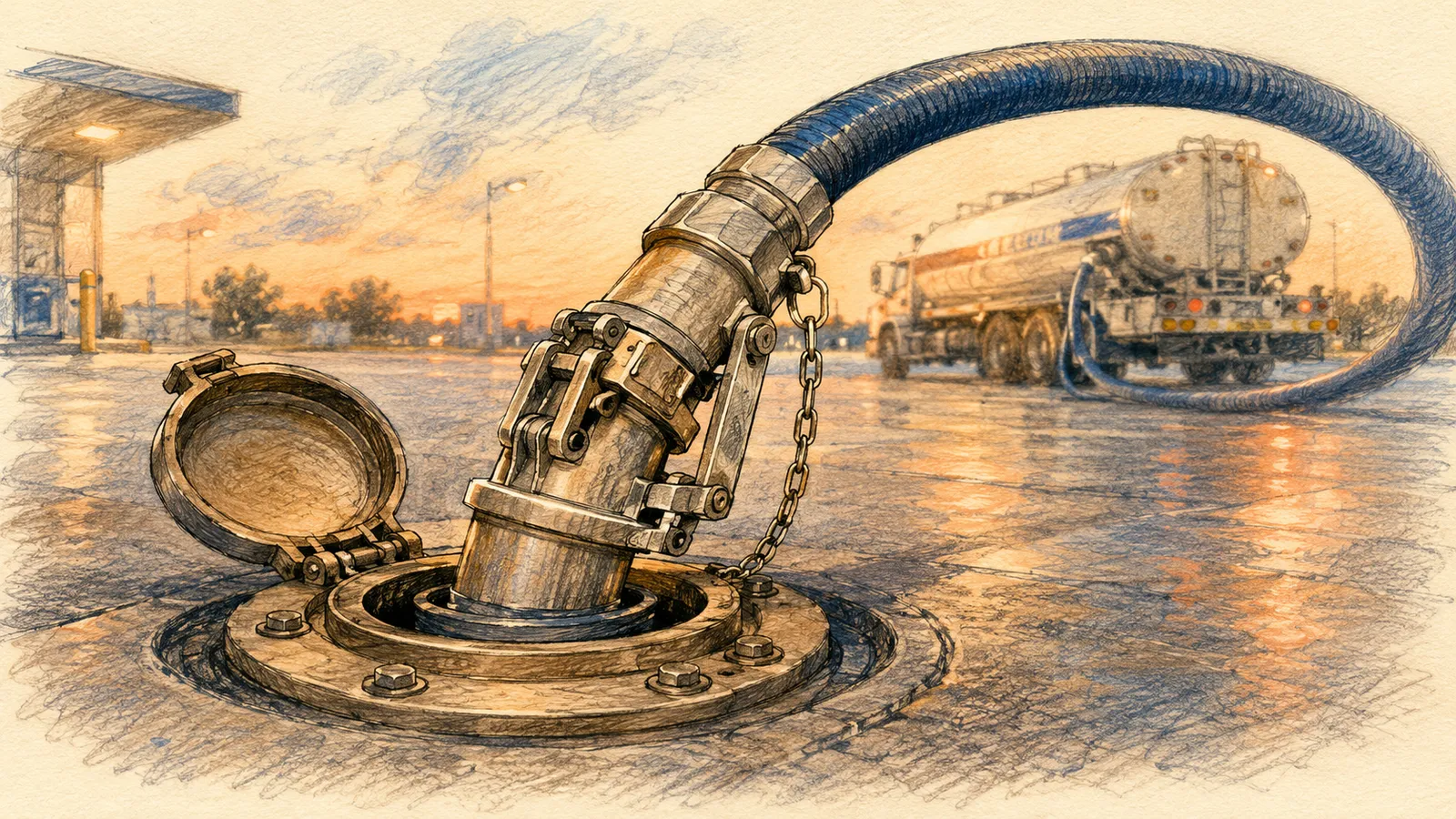
A tank wagon was the vehicle that carried fuel to a customer, first a horse-drawn wagon with a tank on it, later a truck. The dealer tank wagon price, or DTW, is the price for fuel delivered to a dealer by that vehicle.
DTW is a delivered price. A refiner sets it for fuel dropped right at a dealer’s station, with the hauling already included.
It is the steadiest of the wholesale prices. A refiner holds it fairly stable on purpose, to keep its branded dealers from riding every swing of the market. In return, the dealer pays a bit more than the bare rack price.
A jobber that loads at the rack and hauls the fuel itself is taking on the freight in order to earn the gap between the rack price and a delivered price like DTW.
In useA branded dealer that runs no trucks buys on DTW, so the refiner delivers the fuel and the dealer never deals with the rack.
Where the word comes from
Tank wagon goes back to the early fuel trade, when a wagon fitted with a tank delivered kerosene and gasoline to homes and stores. The name held on after wagons became trucks, so the delivered dealer price is still called a tank wagon price.
See also Rack price, Dealer, Branded fuel