
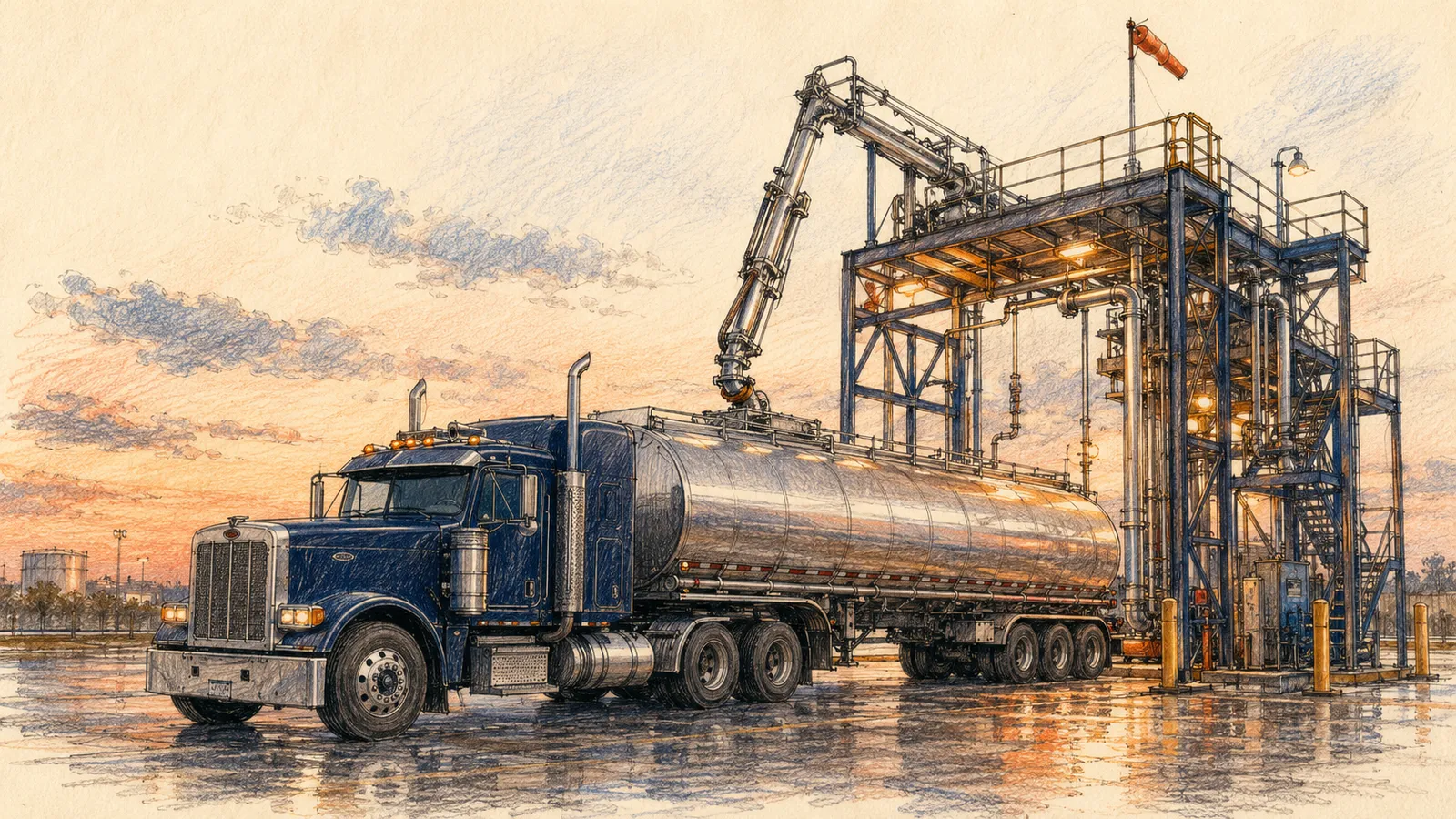
The wholesale price charged for one truckload of fuel at the rack, the loading point at a terminal.
This is the price a jobber pays to fill its own trucks, so it is the foundation of a jobber’s cost. There is a separate rack price for each product, and it changes daily as the market moves, sometimes more than once a day.
Everything downstream is built on top of it. A jobber adds freight, tax, and a margin to the rack price to reach the price it charges a customer.
Rack prices are published and tracked by reporting services the trade follows, so a buyer and a seller can settle on a number without arguing about what the market did that day.
In useWhen the rack price climbs four cents overnight, the jobber’s cost on the same load climbs with it, and the price to its dealers has to follow.
Where the word comes from
It is simply the price set at the loading rack, the place paired with the price charged there.
See also Rack, Dealer tank wagon (DTW), Spot price