
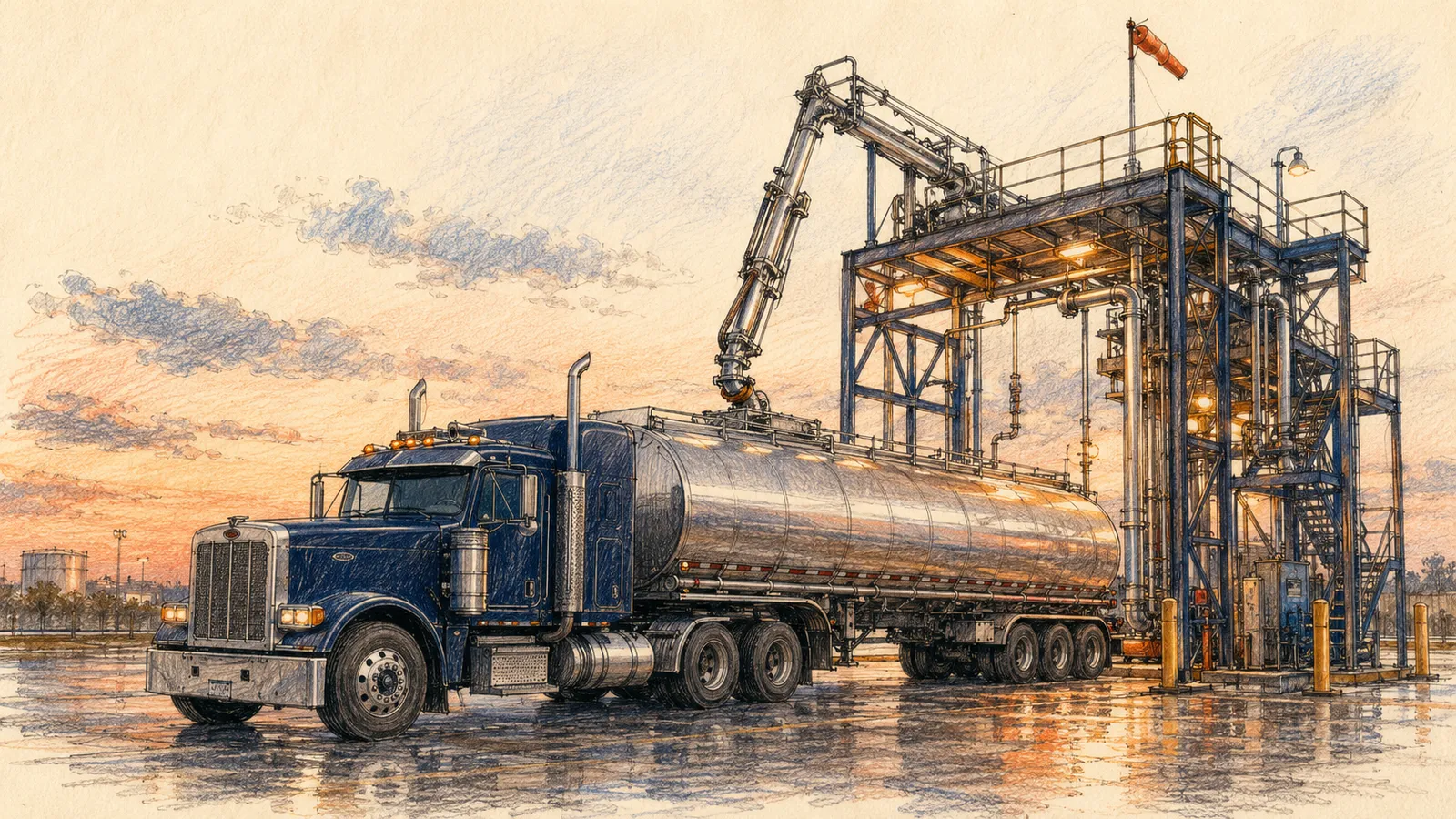
In the fuel business, the rack is the loading point at a terminal, the equipment where a tanker truck pulls in and fills its tank. It is also where the wholesale price is set and the fuel tax is charged, which is why so much of the business turns on it.
A terminal is the large storage site that pipelines and barges deliver fuel into. The rack is the loading area there, the set of pipes and arms a truck connects to and loads through. When someone in the trade says they buy at the rack, they mean they fill their own trucks at that point and haul the fuel themselves.
Because both the wholesale price and the tax attach at the rack, it anchors the rest of the business. Prices are quoted against it, the tax hinges on it, and a jobber’s cost begins the moment a truck loads.
In useEach morning the jobber checks the rack price, sends its trucks to load, and sets the day’s delivery prices off what it paid.
Where the word comes from
Rack is an old word for a frame or stand. The loading equipment is built like one, a structure of pipes and arms, so it took the name. The trade then used the rack as shorthand for the whole loading and pricing point.
See also Rack price, Terminal, Above the rack