
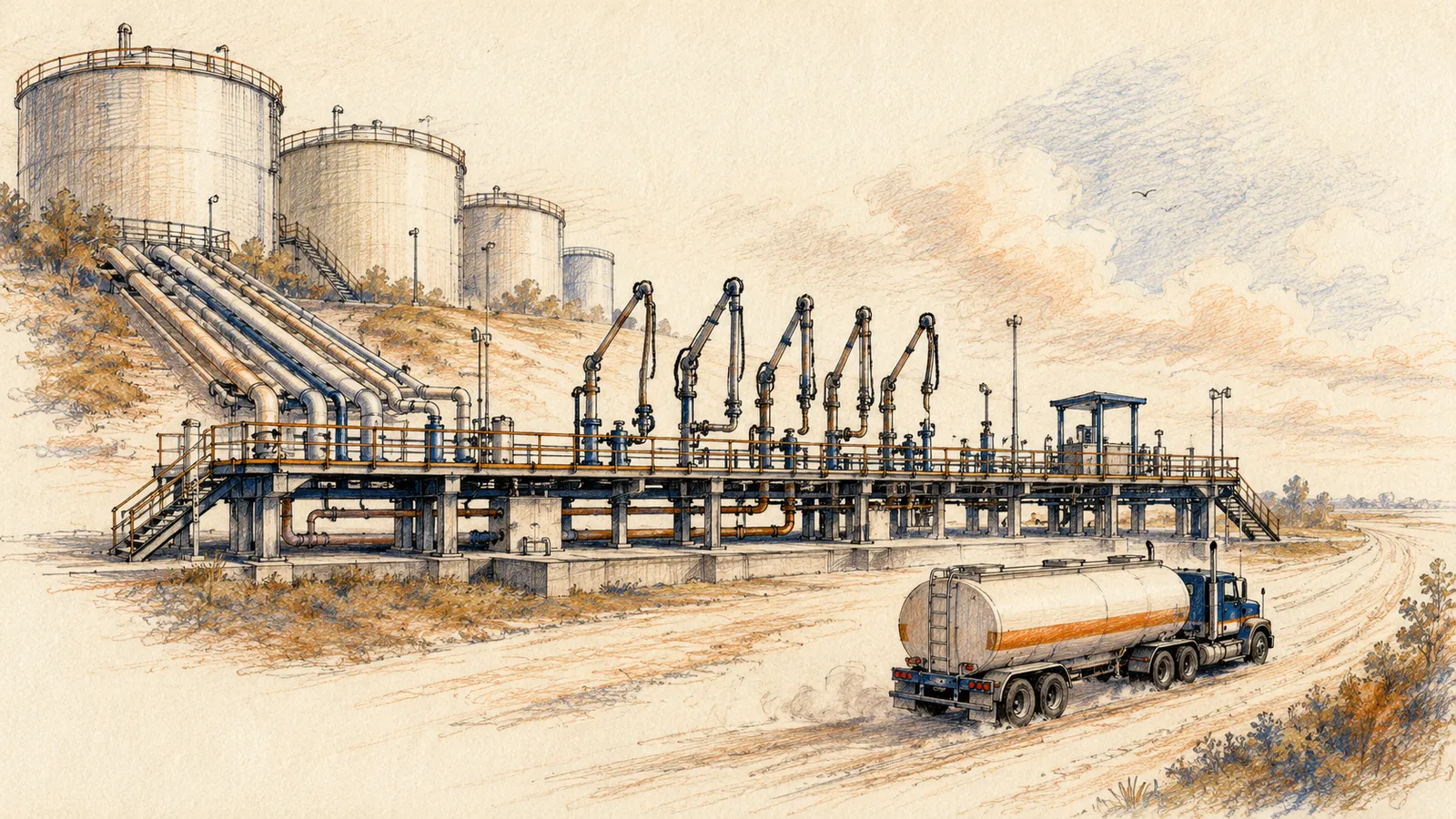
Above the rack is the bulk wholesale stage of fuel: any point before it is physically loaded into delivery trucks at a terminal. It describes where the fuel sits in the supply chain and who is handling it, not a price.
A terminal is the large storage site that pipelines and barges feed into. Fuel that is above the rack is still in that bulk system. It may be at a pipeline origin, moving through a pipeline or by barge, or sitting in terminal storage tanks. At this stage it is handled in large volumes by refiners, terminal operators, and the suppliers who hold the fuel, well before it reaches the retail market.
The rack itself is the loading point, where transport tanker trucks pull up and fill. The moment fuel is transferred from those storage tanks into a truck is called at the rack, or across the rack, and the wholesale price paid right there is the rack price. Once the fuel is loaded into a truck or sitting at a station, it is below the rack.
Why the line matters: most fuel taxes are charged when fuel crosses the rack into a truck. So fuel traded above the rack, between registered parties, usually moves before the per-gallon tax applies. The party holding the fuel at the terminal, called the position holder, is generally the one who owes that tax when it crosses.
One thing to clear up, because it trips people up: above the rack is about the fuel’s place in the chain, not about a price higher than the rack price. A price set above or below the posted rack price is called rack plus or rack minus, which is a separate idea.
In useA refiner and a supplier trade a pipeline lot above the rack, with no per-gallon tax yet. The tax is charged later, when a jobber loads that fuel across the rack into its truck.
Where the word comes from
Rack is an old word for a frame or stand. The loading equipment at a terminal is built like one, so it took the name. Above and below the rack then describe whether the fuel has passed that loading point.
See also Rack, Position holder, Rack price