
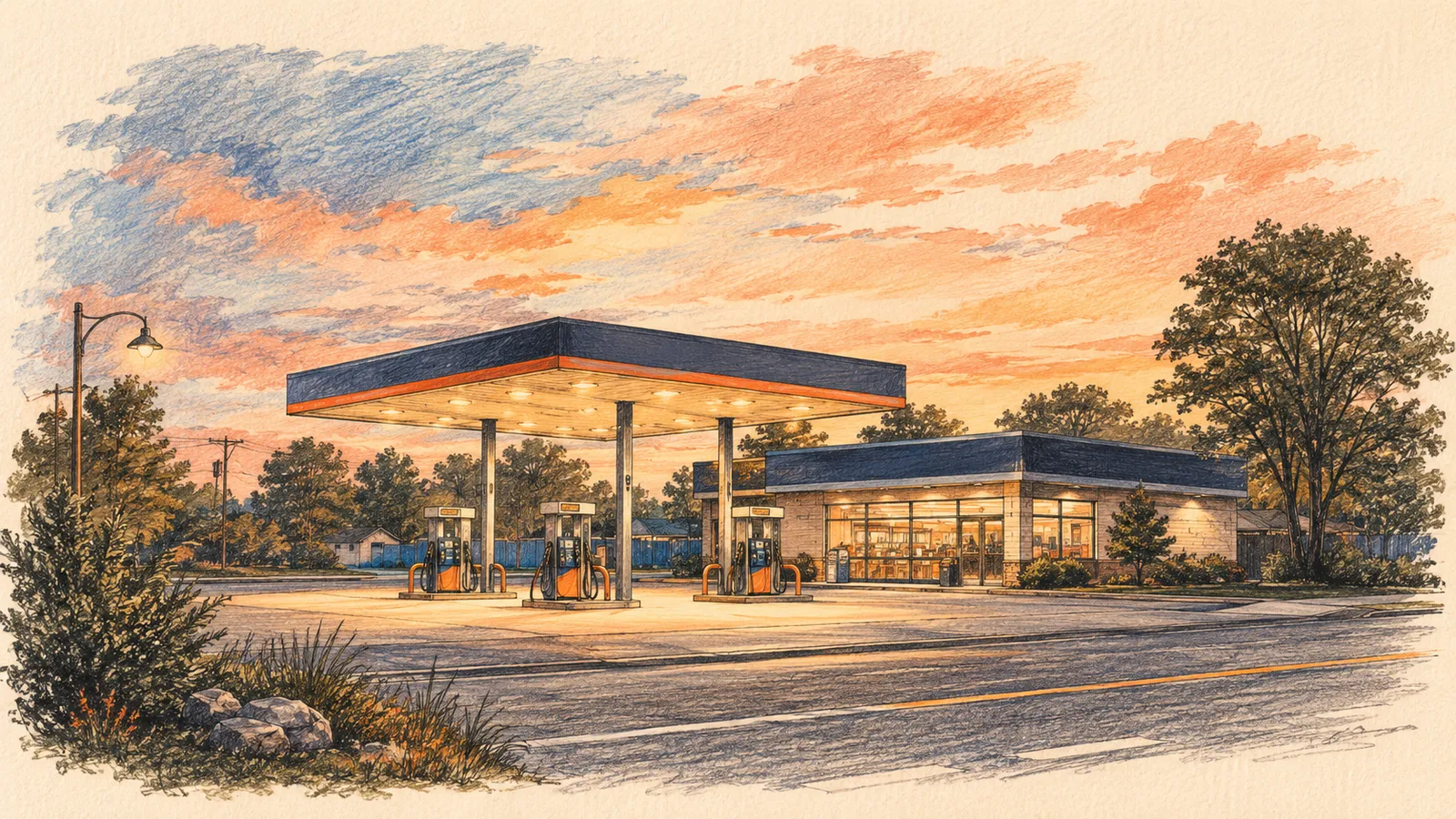
A dealer is an independent station owner who buys fuel and sells it to the public. The dealer owns or runs the site, takes title to the fuel, and sets the pump price.
The dealer is the operator the public actually buys gas from. A dealer owns or leases the station, buys fuel from a supplier such as a jobber or a major oil company, and resells it at the pump. The fuel becomes the dealer’s property when it is delivered, and the profit or loss on it is the dealer’s.
This is what sets a dealer apart from a commissioned agent. An agent runs a station the jobber owns and sells the jobber’s fuel for a commission, never owning the fuel. A dealer carries the fuel, the price risk, and the pump price decision. With that risk comes the freedom to run the site its own way.
Many dealers run branded sites, flying a major oil company’s flag under a contract that comes with image standards and supply terms. Others run unbranded and compete on price. Either way, the dealer lives on a thin margin at the pump and usually leans on the inside store, the snacks, drinks, and other goods, for most of the profit.
In useThe jobber supplies a dozen independent dealers, each of whom owns their station, takes title to the fuel on delivery, and sets their own price at the sign.
See also Commissioned agent, Dealer margin, Jobber