
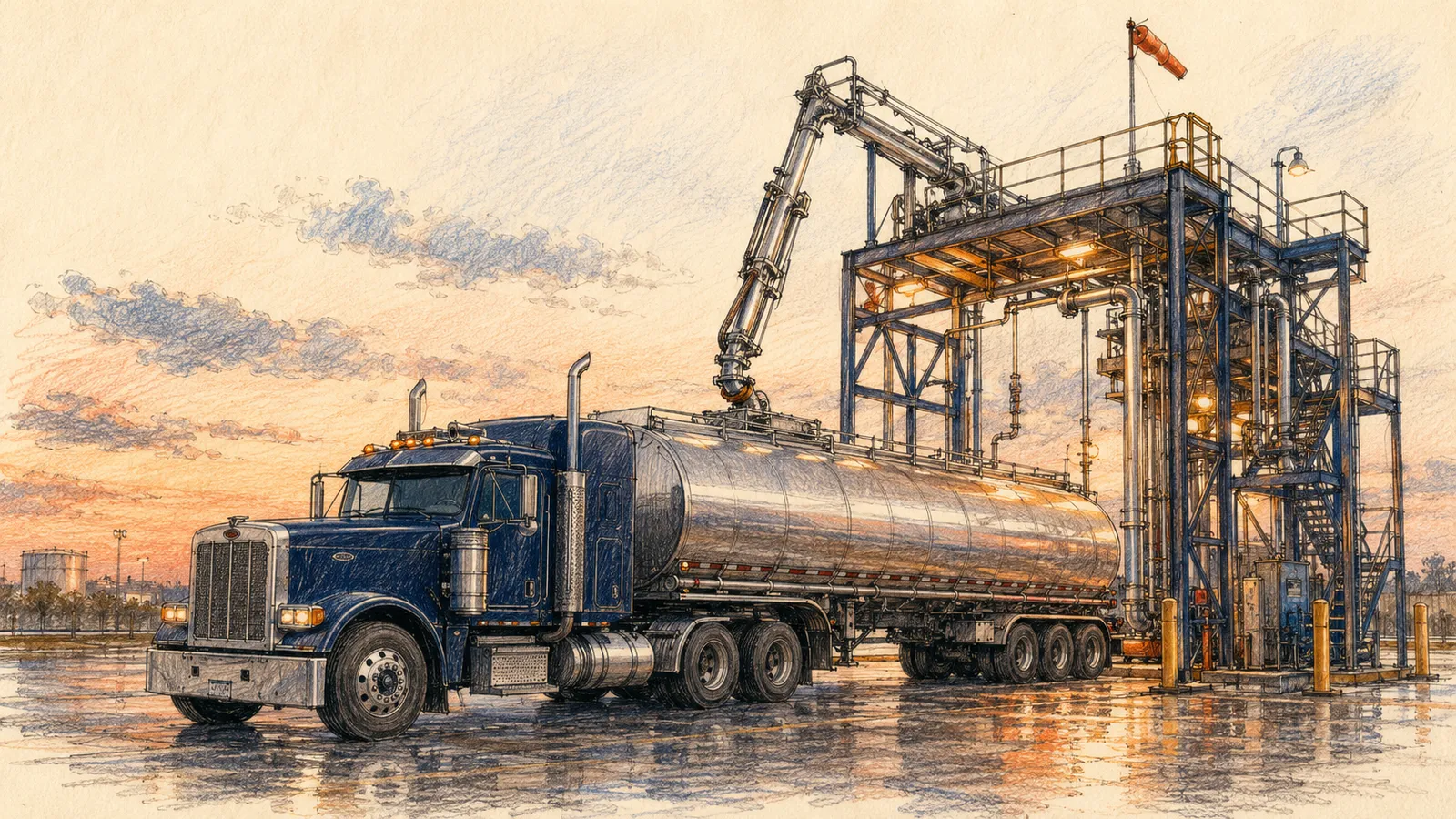
Lifting is loading fuel onto your truck at the terminal rack. The moment you lift, you own the fuel and your cost clock starts.
The rack is the loading point at a terminal, the equipment where a tanker truck pulls in and fills. To lift is to load fuel at that rack. Jobbers talk about lifting fuel the way a store talks about buying stock for the shelves: it is the moment product becomes yours.
That moment carries weight. When you lift, the fuel passes to you, the price you pay is set, and on most loads the per-gallon tax attaches right there. From then on the cost is yours to recover, so how fast and how well you turn that fuel into a paid invoice decides your margin.
Lifting is also where supply terms get real. A contract may set how much you are allowed to lift, at what price formula, and at which terminals. Watching where and when you lift, against the rack price that day, is daily work for a jobber.
In useThe driver lifts an 8,500 gallon load at the rack first thing, so the jobber owns the fuel and the cost is locked in before the first delivery of the day.
See also Rack, Rack price, Above the rack