
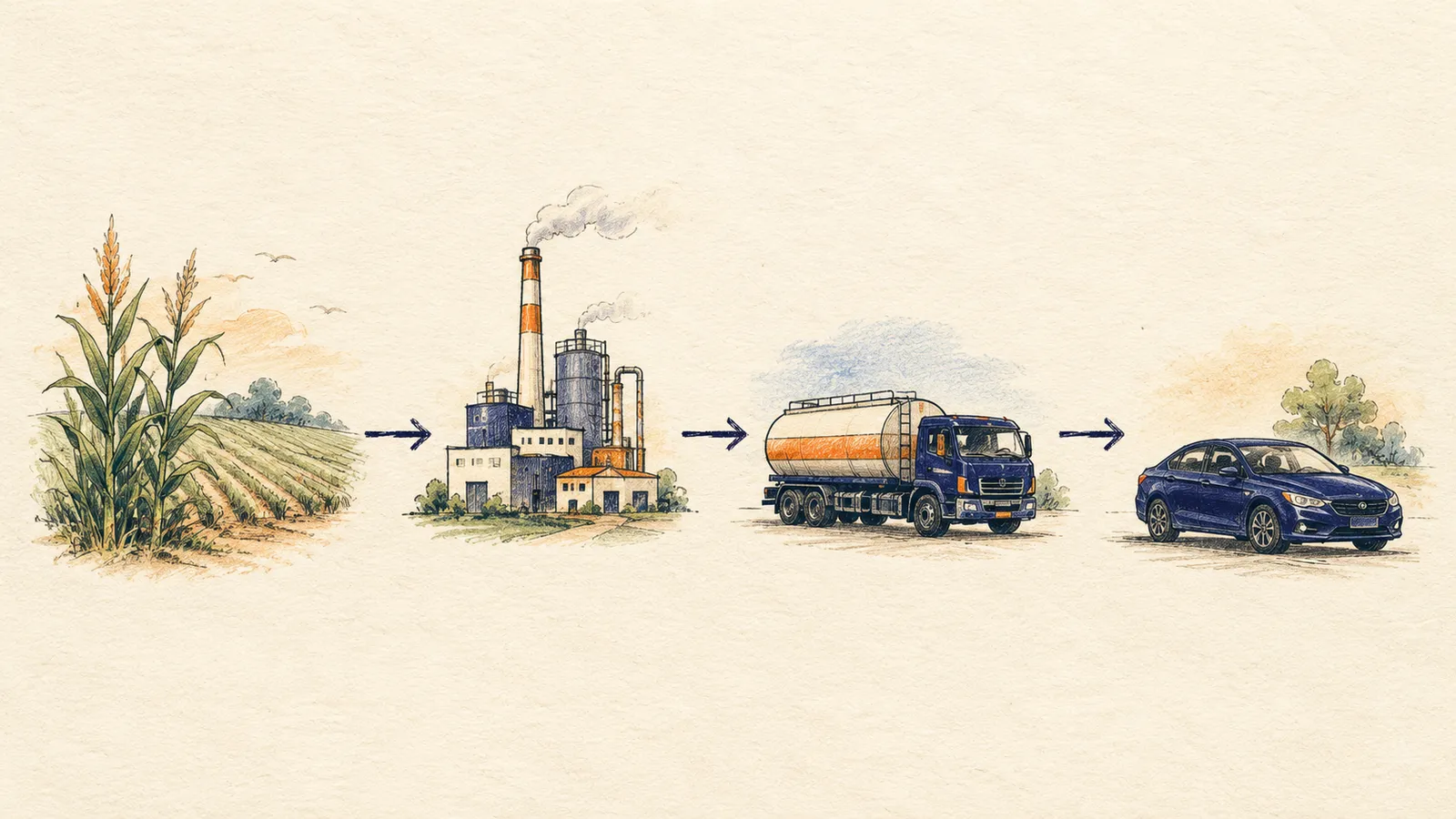
Lifecycle greenhouse gas emissions are the total heat-trapping gases a fuel causes across its entire life, counted from the raw material all the way through to burning the fuel, not just what comes out the tailpipe.
Greenhouse gases trap heat and drive climate change, with carbon dioxide the main one. The simple way to judge a fuel is by what it gives off when it burns, but that misses a lot. The lifecycle view counts every stage: growing or drilling the raw material, processing it into fuel, moving it to where it is used, and finally burning it.
This wider count often changes the picture. A crop-based fuel may burn clean at the tailpipe but take a lot of energy to grow and process, which adds to its total. A fossil fuel carries the emissions of drilling and refining on top of burning. Looking at the whole life is the only fair way to compare them.
Lifecycle emissions are the foundation under carbon intensity, the per-energy score that clean-fuel programs use to rank fuels. To set that score, a program adds up a fuel’s lifecycle emissions and divides by the energy the fuel delivers. So the lifecycle count is the raw material and carbon intensity is the finished number.
For a fuel marketer, the lifecycle idea explains why a fuel’s clean reputation is decided long before it reaches the truck. The feedstock and the production method are baked into the number, so the value of a fuel in a clean-fuels program is set by its whole history, not by how it looks at the pump.
In useOn a lifecycle basis, renewable diesel made from waste grease scores low because the feedstock would have been thrown away, while the same diesel made from a freshly grown crop scores higher once the farming is counted.
See also Carbon intensity, Indirect land use change, GREET model