
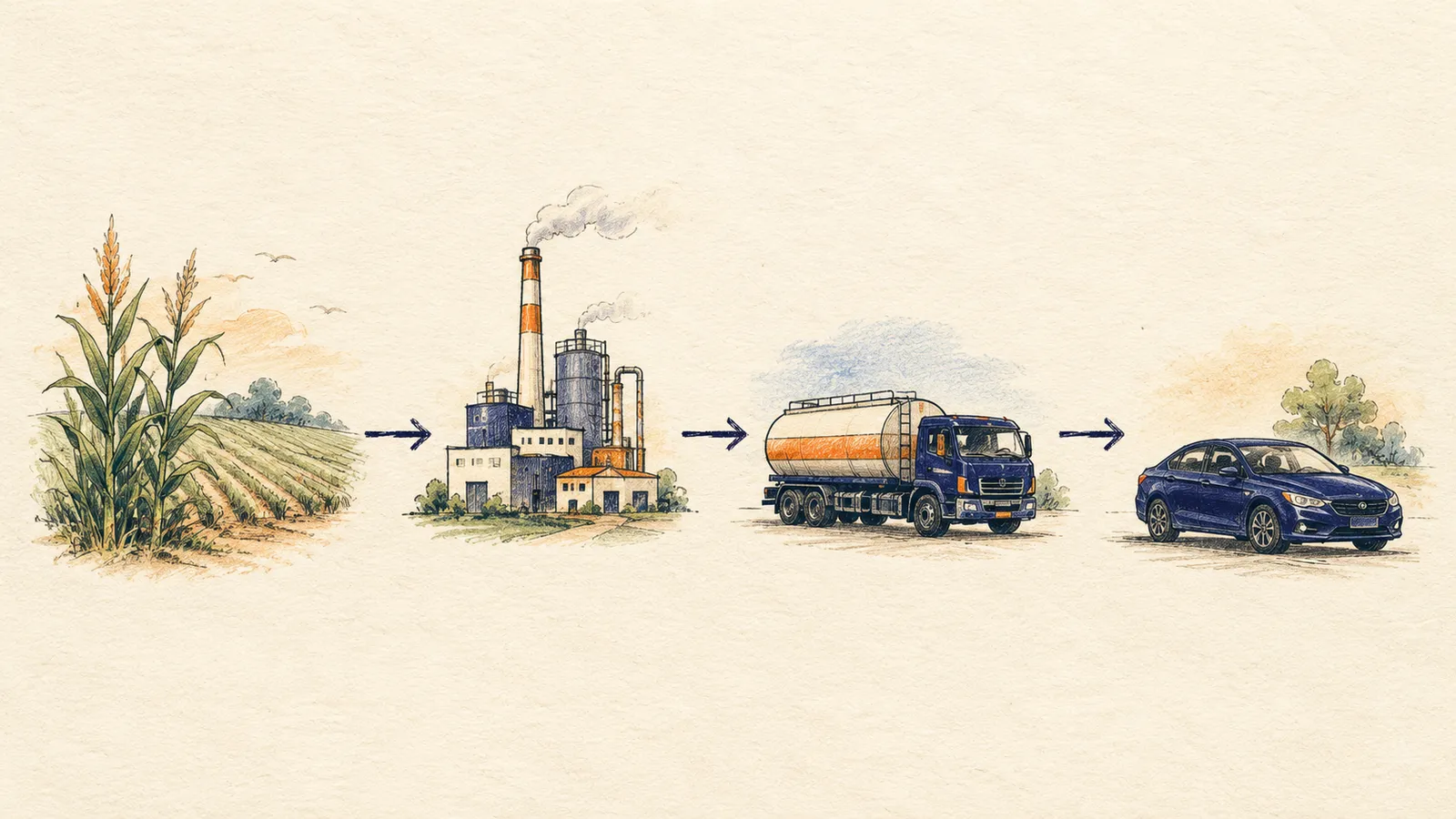
Indirect land use change is the extra greenhouse gas that shows up when using crops to make fuel pushes farming onto new land somewhere else. Clearing that new land can release carbon that was stored in soil and plants.
When a crop like corn or soybeans is used to make fuel instead of food, the food demand does not vanish. It gets met by growing more of that crop elsewhere, which can mean plowing up grassland or clearing forest. The carbon those untouched lands had stored gets released, and that release is the indirect part: it happens away from the fuel, set off by the decision to use the crop.
It is called indirect because no one directly burns anything to cause it. The link runs through markets. More crop going to fuel means tighter supply, higher prices, and more land brought into farming around the world to make up the difference. The emissions from that land shift get charged back to the fuel that started the chain.
Clean-fuel programs try to fold an estimate of this effect into a crop-based fuel’s carbon intensity score. The estimate is hard to pin down and experts argue over the right figure, since it depends on guessing how global farming responds. Because of that, the land-use number built into a fuel’s score can be a point of real dispute.
For a fuel marketer, indirect land use change is why a crop fuel may score worse than its clean burning suggests, and why waste-based fuels often score so well. A fuel made from used cooking oil or animal fat causes little or no new farming, so it usually escapes the land-use penalty that weighs on fresh crops.
In useA fuel made from a food crop carries an added charge for indirect land use change in its carbon score, while a fuel made from waste grease avoids most of it because no new land is farmed to supply it.
See also Carbon intensity, Lifecycle greenhouse gas emissions, Fuel pathway