
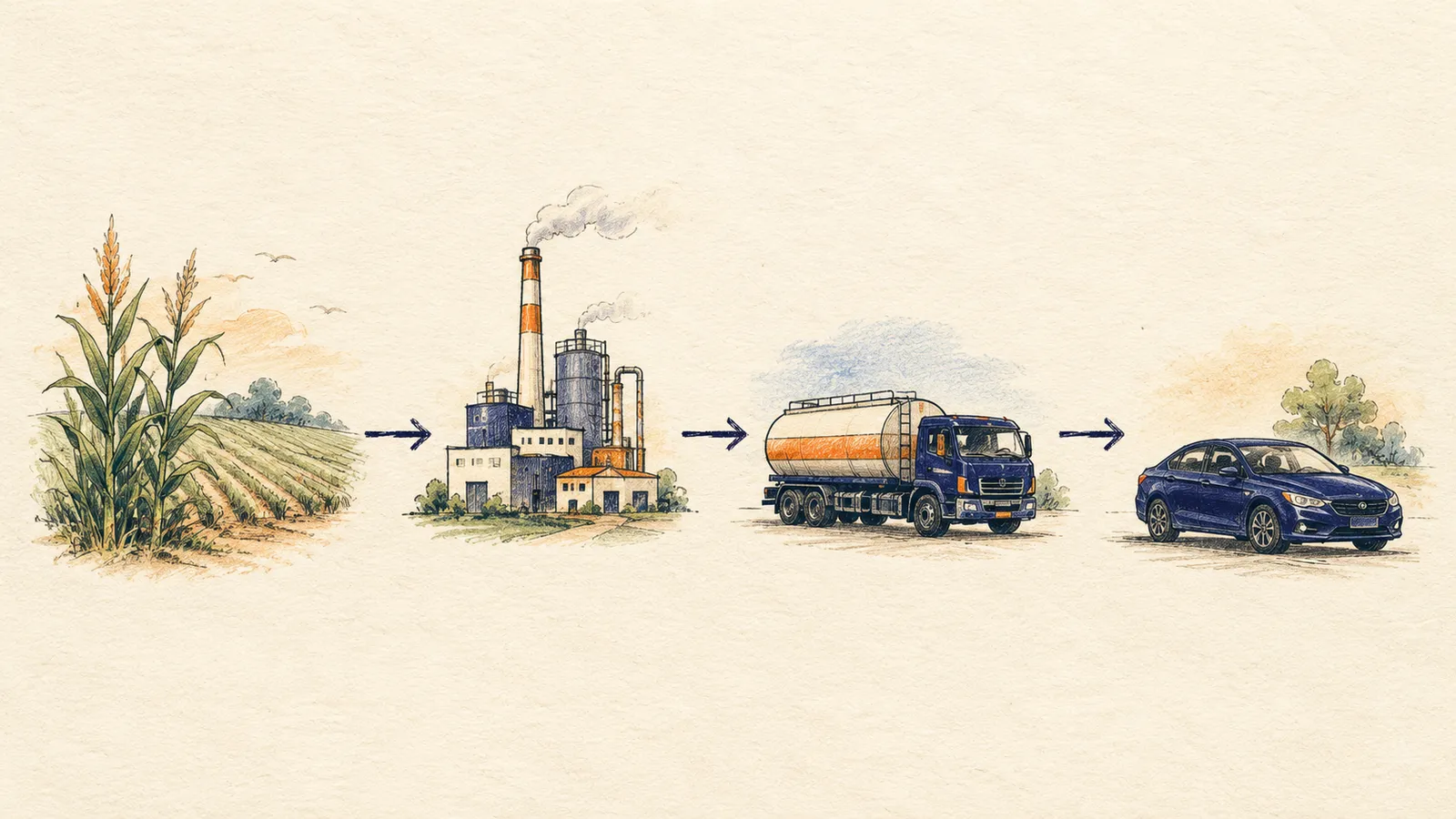
A fuel pathway is the full recipe and route of a specific batch of fuel: what it is made from, how it is processed, and how it gets from there to the pump. Clean-fuel programs study each pathway to give it a carbon intensity score.
No two fuels are made exactly the same way. A pathway describes one specific way of making a fuel, start to finish: the raw material it starts from, called the feedstock, the steps used to turn that into fuel, the energy those steps burn, and the trip the finished fuel takes to reach the user.
Pathways matter because the same kind of fuel can be clean or dirty depending on how it was made. Ethanol from one mill that runs on clean power and ethanol from another that runs on coal are the same product in the tank, but they sit on different pathways and earn different carbon intensity scores.
In a clean-fuels program, a producer registers the pathway for its fuel and the program assigns it a carbon intensity number. That number then follows that batch of fuel into the credit math. A cleaner pathway earns more credits, so producers have a reason to clean up each step.
For a fuel marketer, the pathway behind a load is what determines its value in a clean-fuels state. Two trucks of renewable diesel can be worth different amounts in credits because they came down different pathways, so the paperwork on where and how the fuel was made is worth as much as the fuel.
In useRenewable diesel made from used cooking oil and renewable diesel made from soybean oil follow different fuel pathways, so each carries its own carbon intensity score and its own credit value.
See also Carbon intensity, Lifecycle greenhouse gas emissions, GREET model