
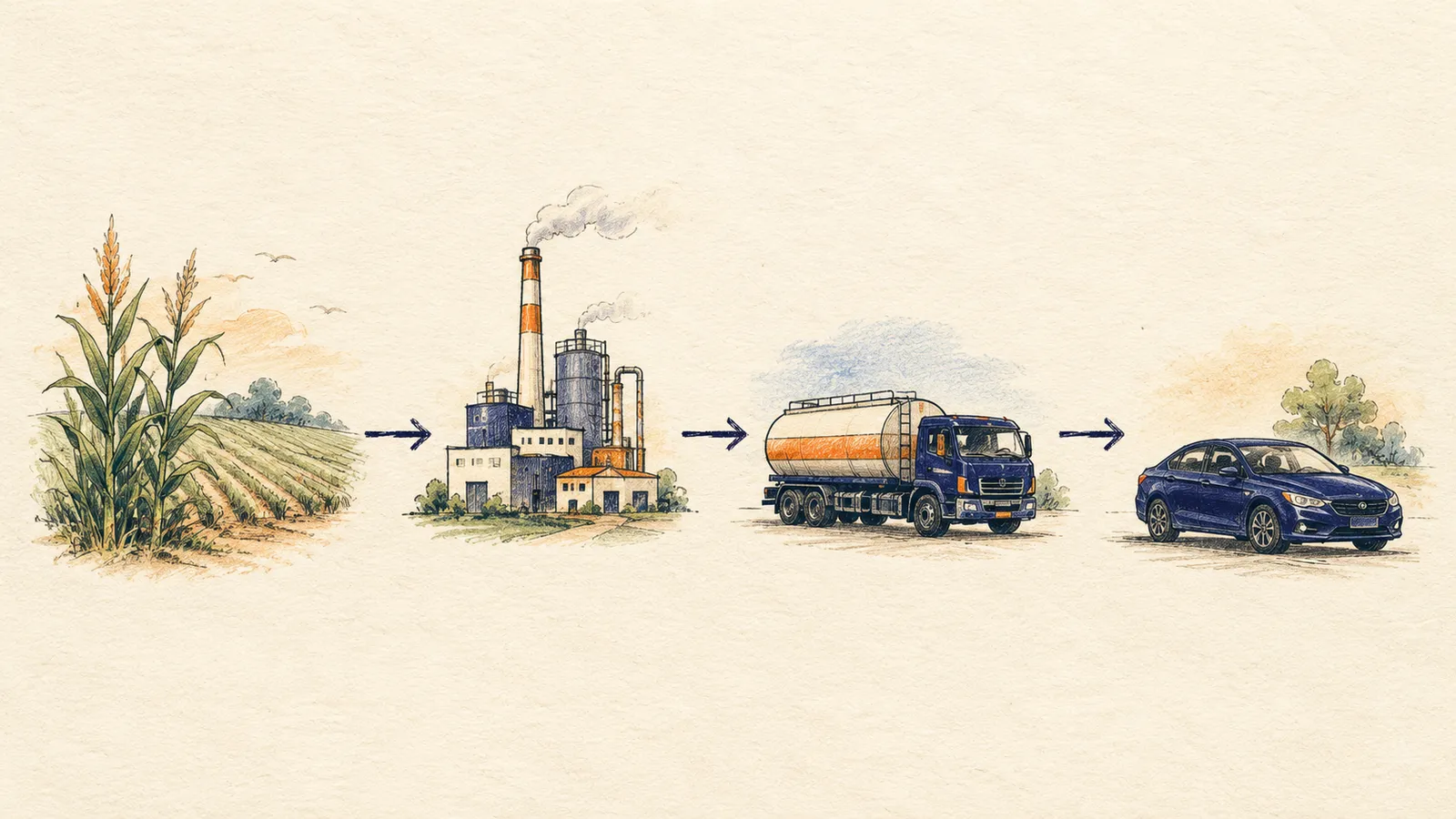
Book-and-claim accounting is a way to credit a clean fuel even when the actual gallons cannot be traced to one buyer. The clean quality of the fuel is tracked on paper and sold separately from the physical fuel.
Fuels and energy often flow through shared systems where one batch mixes with another and cannot be kept apart. Once a clean fuel goes into a common pipeline, tank, or grid, no one can point to the exact molecules a given buyer received. Book-and-claim solves that by separating the clean quality of the fuel from the fuel itself.
It works in two steps that give it its name. The clean attribute is booked, meaning recorded and tracked as its own unit on paper when the clean fuel is made and put into the system. A buyer then claims that attribute by purchasing the paper unit, even though the molecules they actually use may have come from anywhere in the shared pool.
The benefit is that clean fuel can be made where it makes the most sense and used on paper where it is needed most, without building a separate delivery system for every clean gallon. As long as a clean unit went in for every clean unit claimed, the books stay honest and double counting is prevented.
For a fuel marketer, book-and-claim opens doors that physical delivery would close. A customer far from where a clean fuel is produced can still claim its benefit, which widens the market for low-carbon fuels and the credits tied to them. The trust in the system rests entirely on careful tracking that one attribute is never sold twice.
In useA fleet that cannot get renewable natural gas piped to its own yard buys the gas on a book-and-claim basis instead, claiming the clean attribute on paper while burning ordinary gas from the shared pipeline.
See also Environmental attribute, Renewable energy certificate (REC), Renewable natural gas (RNG)