
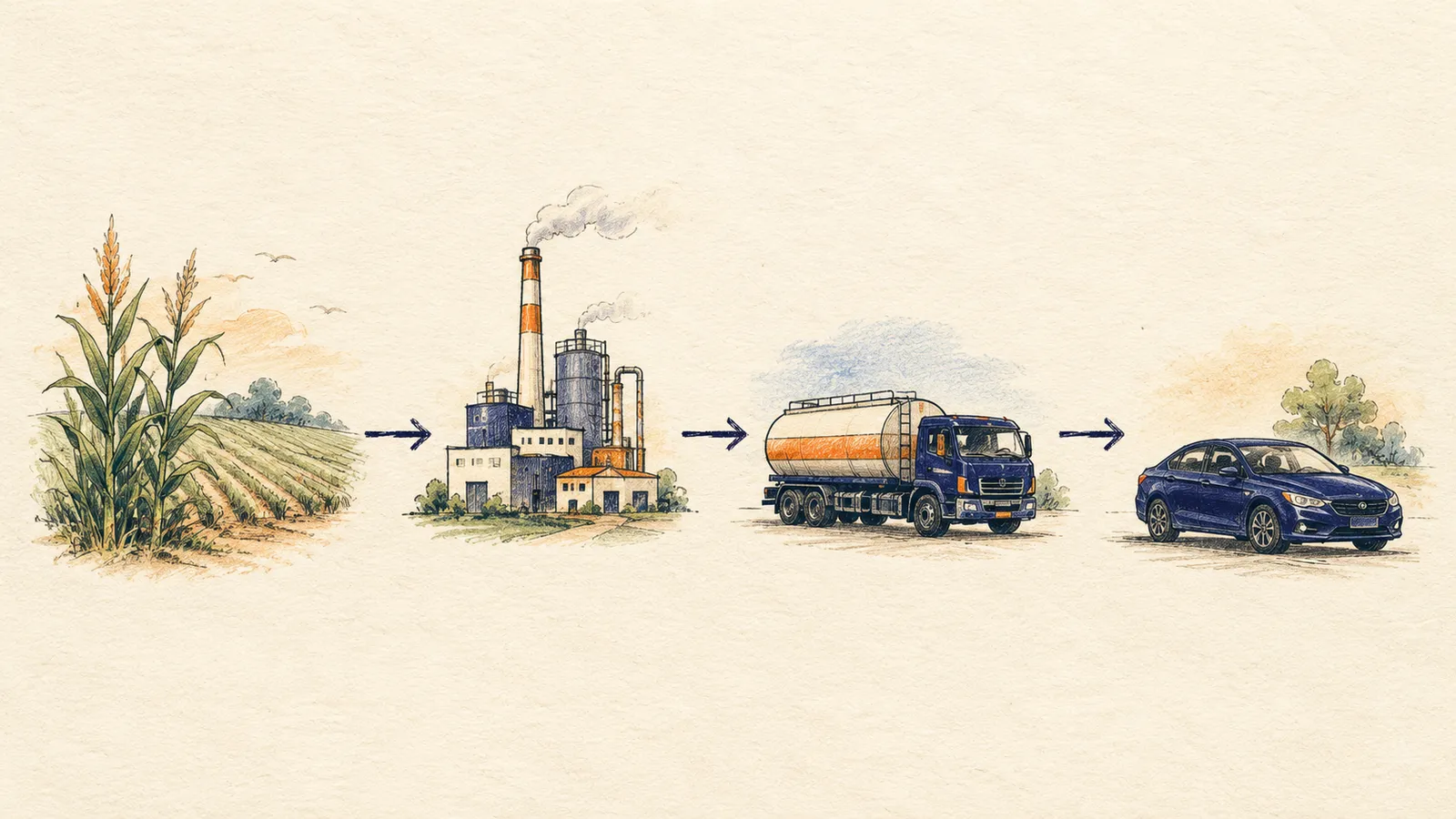
An environmental attribute is the clean or low-carbon quality of a fuel or energy, treated as a thing of value in its own right. It can be tracked, owned, and often bought and sold apart from the physical product.
When a fuel is made cleanly or a unit of power comes from wind or sun, that cleanness is worth something beyond the energy itself. An environmental attribute is a way of naming that worth and turning it into something a market can handle. It separates the clean quality from the molecules or electrons, so the two can be owned and traded on their own.
This separation is what makes most clean-energy markets work. A credit in a clean-fuels program is an environmental attribute. So is a certificate proving power came from a renewable source. In each case the attribute carries the environmental benefit, and selling it passes that benefit, and its value, to the buyer.
Keeping attributes honest depends on careful counting. Each one represents a real, specific benefit that happened once, so the rule is that it can be claimed only once. If an attribute were sold twice, two parties would claim the same clean gallon or the same clean kilowatt, and the whole system would lose its meaning.
For a fuel marketer, environmental attributes are a source of income that rides alongside the fuel. The same gallon can earn its sale price plus the value of the attributes it carries, so understanding which attributes a fuel generates, and how to capture and sell them, is part of pricing clean fuel.
In useA producer sells the renewable natural gas as fuel and sells the clean attribute attached to it separately, so the same gas brings in two streams of value.
See also Renewable energy certificate (REC), Clean fuel credits and deficits, Book-and-claim accounting