
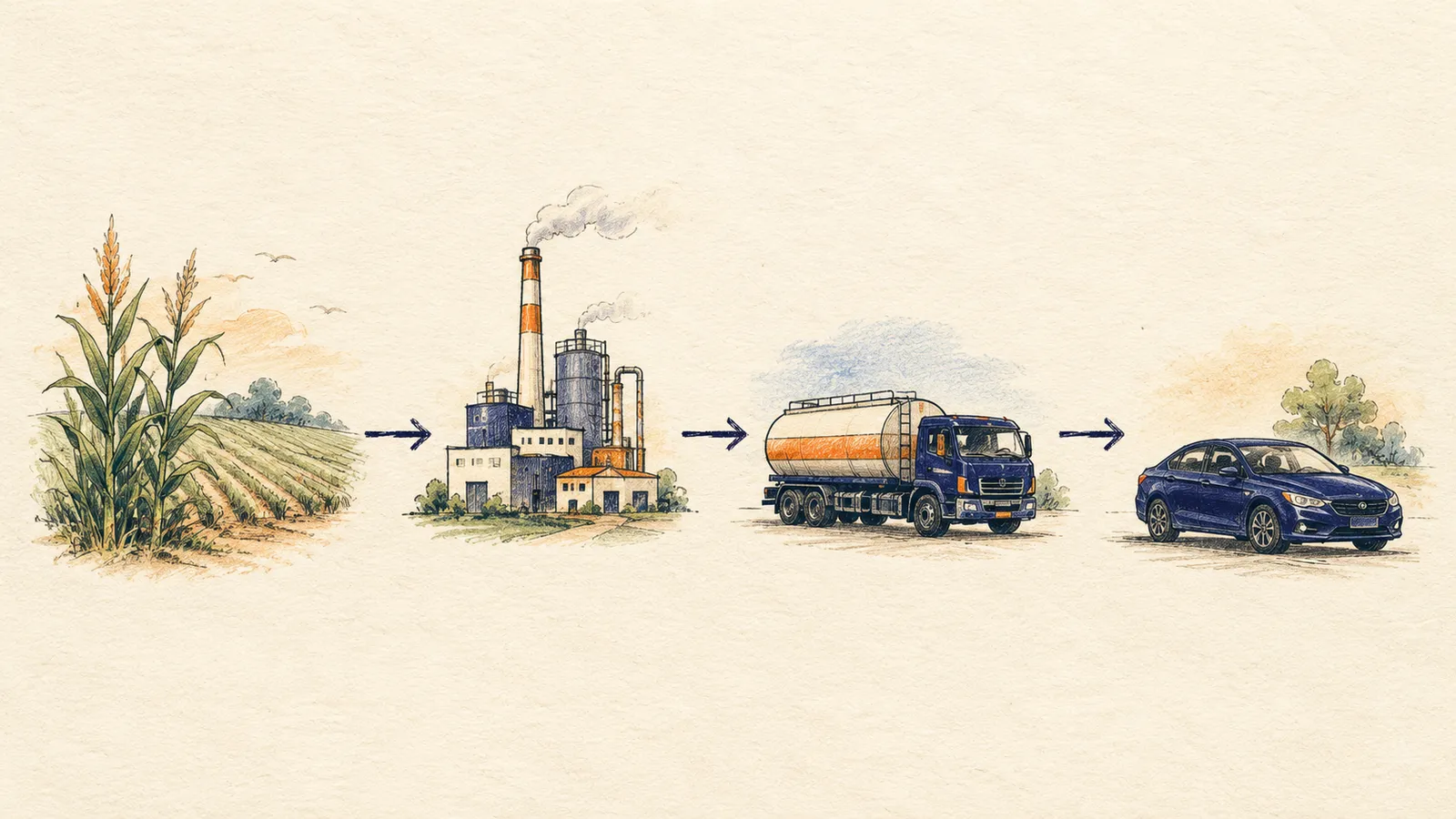
A regulated party is the company a clean-fuels program holds responsible for meeting its rules. It is usually the producer or importer that first brings a fuel into the state’s market.
A clean-fuels program needs a clear answer to one question: who has to comply. Naming the regulated party answers it. Rather than chase every truck and station, the program points at the company that first puts a fuel into the state market, normally the producer or the importer, and makes that company carry the obligation.
The regulated party has real duties. It has to track the fuels it brings in, report the volumes and their carbon intensity scores, and settle up at the end of each period by holding enough credits to cover any deficits it ran up. If it is short, it must buy credits or face penalties.
Putting the burden on the first party in the chain keeps the program manageable. There are far fewer producers and importers than there are retailers, so the program can oversee a smaller group and still cover all the fuel that enters the market. The cost and the value of credits then ripple out to everyone downstream.
For a fuel marketer, knowing whether you are the regulated party is the first thing to settle in a clean-fuels state. If you import or produce fuel, the reporting and credit obligations may fall on you directly. If you buy from someone upstream who already carries that role, the program touches you through the price of the fuel instead.
In useA company that imports diesel into a clean-fuels state is the regulated party for that fuel, so it must report the gallons, track their carbon intensity, and hold enough credits to cover the deficits they create.
See also Low Carbon Fuel Standard (LCFS), Clean fuel credits and deficits, Carbon intensity