
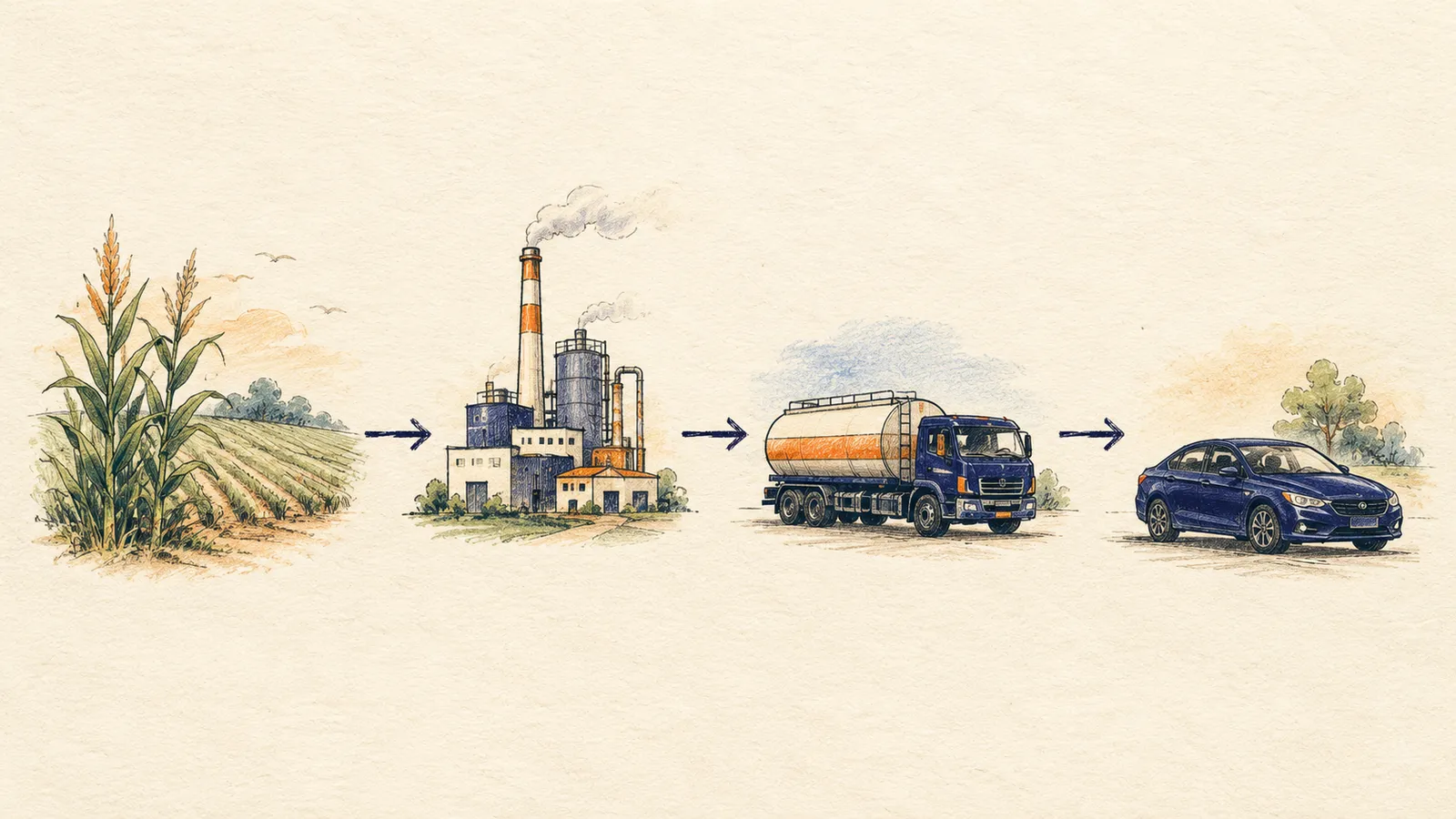
The Low Carbon Fuel Standard, or LCFS, is California’s program for making transportation fuels cleaner over time. It sets a yearly limit on the carbon intensity of the fuel sold in the state and tightens that limit as the years go on.
Carbon intensity is a score for how much greenhouse gas a fuel causes across its whole life. The LCFS sets a target carbon intensity for the fuel pool each year and lowers it on a schedule, so the average fuel sold in California has to get cleaner as time passes.
The program works through credits and deficits. A fuel that beats the year’s target earns credits, and a fuel that misses it runs up deficits. Companies that are responsible under the program must hold enough credits to cover their deficits, and because credits trade between companies, cleaner fuels carry a real dollar value.
California was first, but it is not alone. Oregon and Washington run their own equivalent programs, usually called Clean Fuels Programs, built on the same idea of a falling carbon-intensity target backed by tradable credits. Other states study the model from time to time, so the approach tends to spread.
For a fuel marketer, the LCFS and its cousins change the math on clean fuels in those states. Selling a low-carbon fuel there can generate credits worth selling, while selling only high-carbon fuel can leave a company buying credits to stay in compliance. It is one of the strongest forces pulling renewable diesel, renewable natural gas, and similar fuels into the market.
In useA jobber bringing renewable diesel into California earns LCFS credits on it, and those credits add income on top of the fuel sale itself.
See also Carbon intensity, Clean fuel credits and deficits, Regulated party