
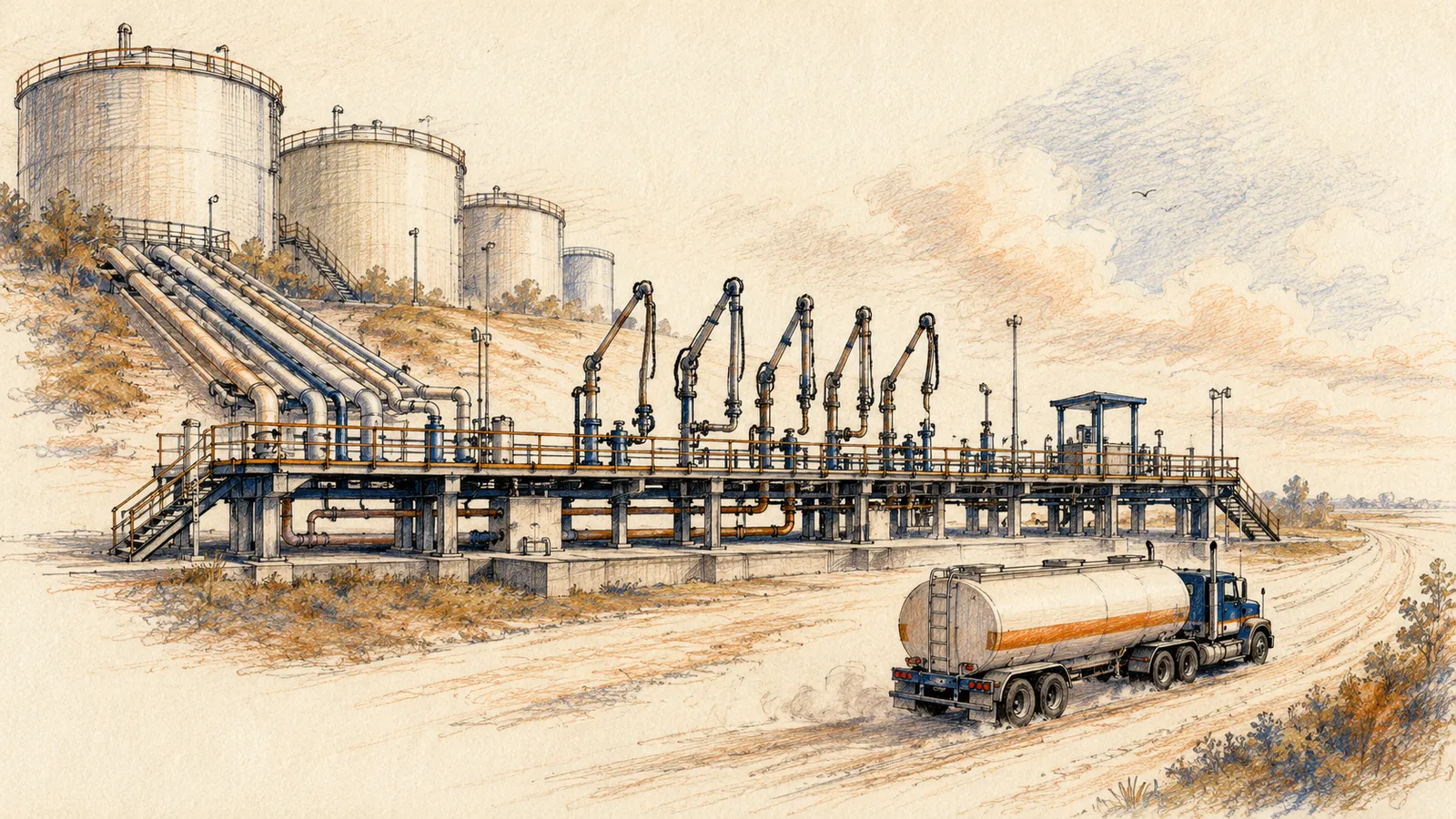
Below the rack is fuel after it has been loaded into a delivery truck and pulled away from the terminal, now handled as finished product on its way to the customer.
A terminal is the large storage site that pipelines and barges feed into, and the rack is the loading point there, where trucks pull in and fill. Fuel that has crossed the rack onto a truck is below the rack. So is fuel sitting at a bulk plant, a station, or in a customer’s tank. It has left the bulk system and entered the finished-fuel market.
It is the natural pair to above the rack, which is the bulk wholesale stage before loading: fuel in pipelines, barges, and terminal tanks. The rack is the dividing line between the two, the point where bulk fuel becomes a truckload bound for somebody.
Why the line matters is tax. Most per-gallon fuel taxes are charged as the fuel crosses the rack into a truck. So fuel below the rack has generally already had the tax applied, while fuel above it usually has not. That single fact shapes who owes what across the whole chain.
One thing to keep straight: below the rack describes where the fuel sits in the chain, not a price under the rack price. A price set under the posted rack number is called rack minus, which is a separate idea.
In useOnce the jobber’s truck loads at the rack and rolls out the gate, that fuel is below the rack, taxed and headed for a dealer’s tanks as finished product.
See also Above the rack, Rack, Bulk transfer system