
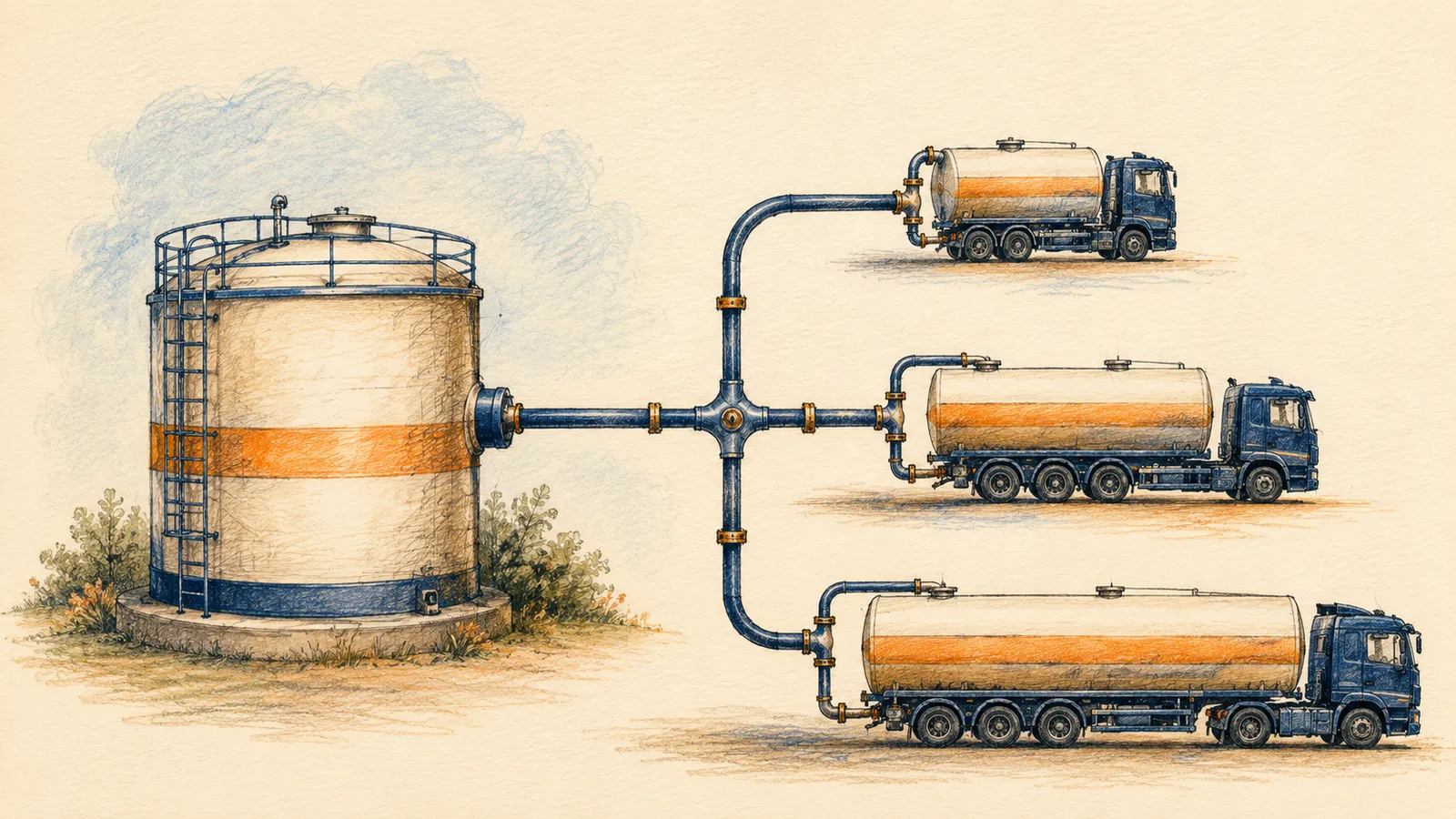
Allocation is a cap a supplier puts on how much fuel you are allowed to buy. When supply runs short, it decides who actually gets product.
Most of the time you buy what you need. When supply tightens, a refinery or supplier cannot fill every order, so it rations. Each customer is told a limit, often a share of normal volume, and that limit is your allocation.
The cap is usually tied to history. A supplier looks at how much you lifted (loaded onto your trucks) in normal months and gives you a percentage of that. Buy 80 percent of normal one month and that becomes your ceiling no matter how many customers are calling.
For a jobber (the wholesaler who hauls fuel from the terminal to local accounts) allocation is where supply turns into a real problem. You may have demand you cannot serve, and you have to decide which customers get the gallons you do receive. A solid buying history and more than one supply source are the best protection.
In useWhen the pipeline went down, the supplier put everyone on allocation at 70 percent of normal, so the jobber had to ration its own dealers to match.
See also Supplier, Lifting, Supply contract