
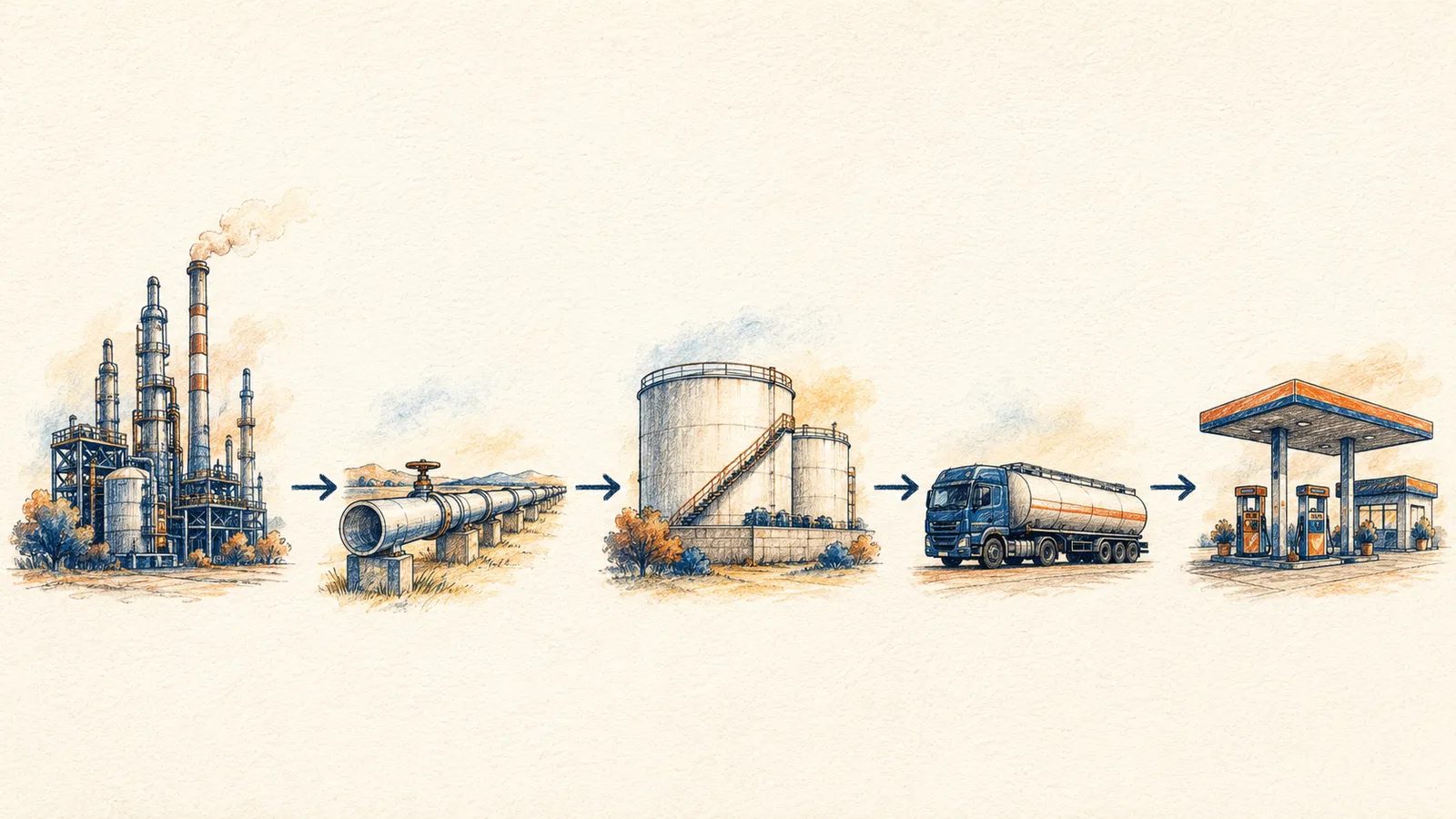
A supply contract is the agreement that sets where a fuel business buys its fuel, by what price formula, in what volumes, and on what terms.
This is usually the first real deal a fuel business makes, because you cannot reliably sell fuel you cannot reliably buy. The supply contract ties the buyer to a supplier (the party that sells fuel into the chain) and spells out the relationship for the length of the term.
The heart of it is the price formula. Rather than a fixed number, the contract usually sets price as a published benchmark plus or minus a few cents, so the cost tracks the market as it moves. It also fixes the volume the buyer can take, the credit terms, and whether the fuel comes branded, carrying a major’s name and additive, or unbranded.
The terms inside it decide a lot about how the business runs. A volume commitment that is too high in a slow year, a price formula tied to the wrong benchmark, or thin credit terms can each squeeze a buyer for the whole length of the deal. That is why the contract is worth reading closely before signing, not after.
In useBefore adding a new station, the jobber checks its supply contract to be sure the extra gallons stay inside the volume the deal allows.
See also Supplier, Rack price, Branded fuel