
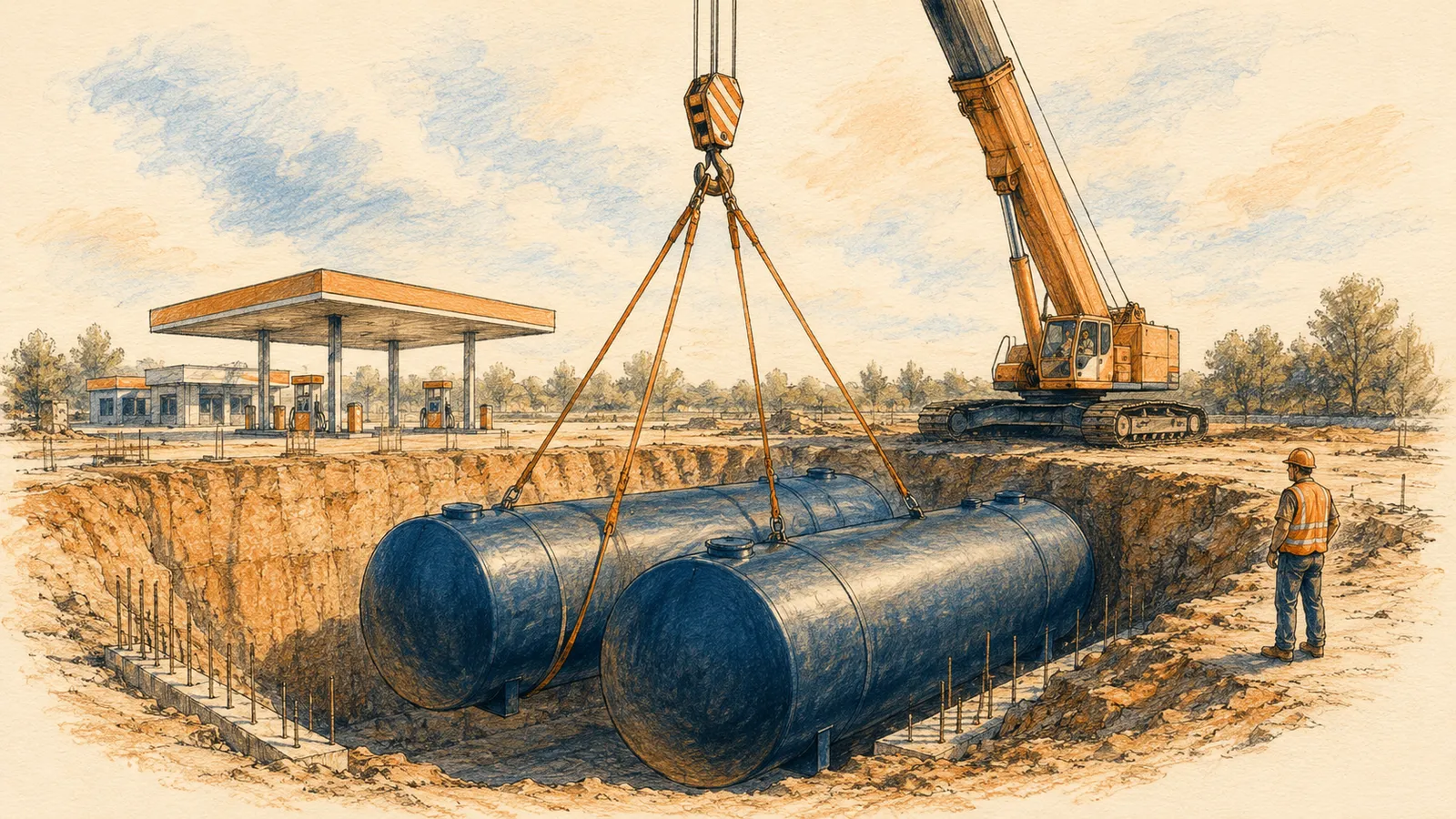
An underground storage tank, or UST, is a fuel tank buried in the ground at a station or bulk site. Because a leak can poison soil and groundwater, these tanks are tightly regulated.
The tanks that hold a station’s fuel mostly sit underground, with the pumps above them. Burying them saves space and keeps the fuel cool and out of the way. The catch is that a leak underground is hidden, and fuel that seeps into the soil can reach groundwater and do real, costly damage before anyone sees it.
Because of that risk, USTs carry some of the heaviest rules a fuel site faces. The federal rules require regular walkthrough checks, ongoing leak detection, testing of the tank and its lines, training for the people who run them, and records to prove all of it was done. States often add their own layers on top.
For an operator the stakes are real. A failed inspection or a missed test can shut a site down, and an undetected leak can turn into a cleanup bill large enough to end a business. Watching the tanks closely, often with an electronic gauge that reports the level around the clock, is both a legal duty and plain self-protection.
In useThe operator runs the monthly UST walkthrough, logs the leak-detection results, and keeps the records ready for the day the inspector shows up.
Where the word comes from
UST is short for underground storage tank, named plainly for a tank that stores fuel under the ground.
See also Automatic tank gauging (ATG), Wet stock, LUST fee