
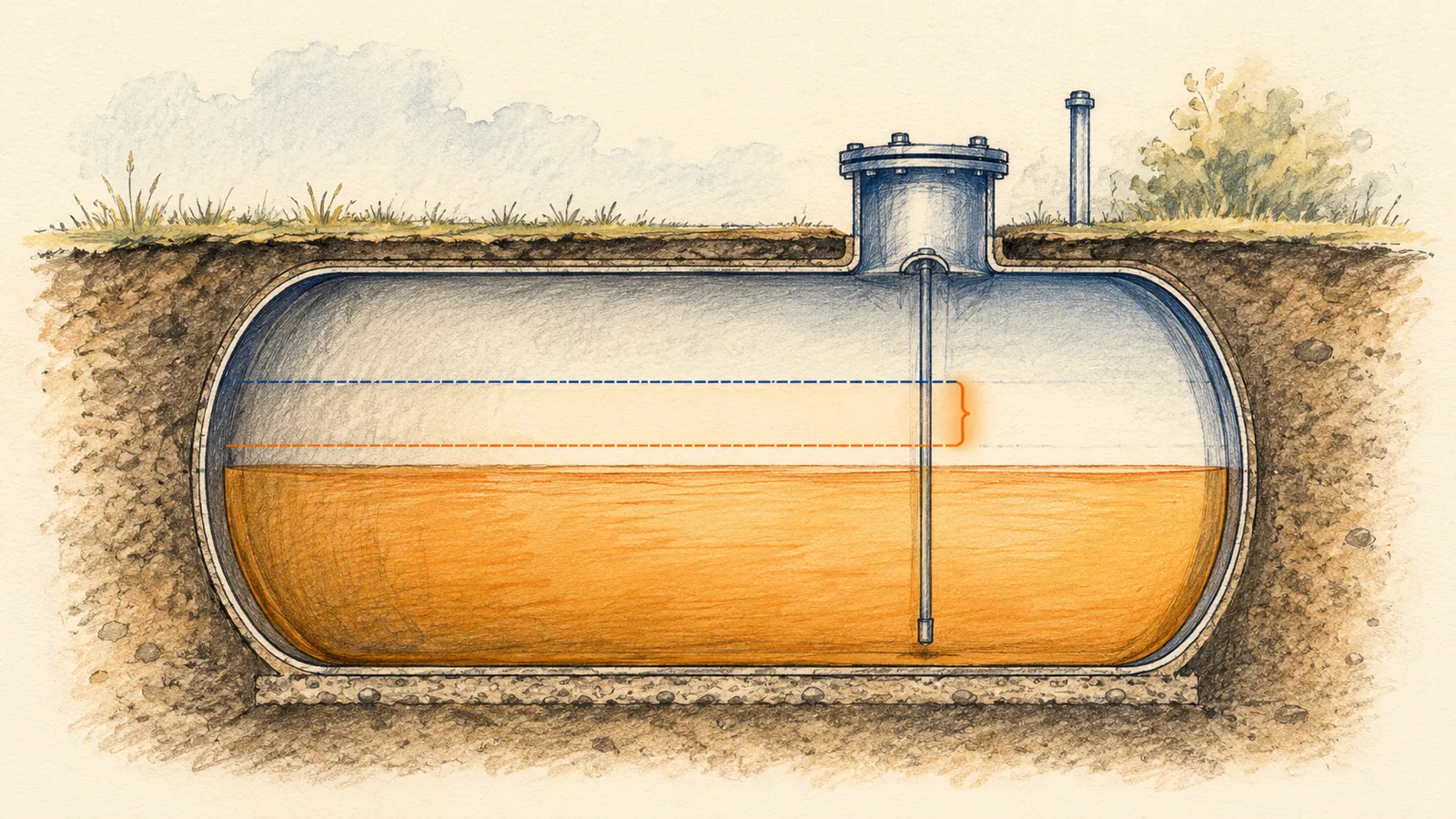
Wet stock is the fuel itself, the liquid product sitting in the tanks. The name pairs with dry stock, the merchandise on the store shelves.
At a site that sells both fuel and goods, the trade splits the inventory into two kinds. Wet stock is the fuel in the underground tanks. Dry stock is everything inside the store, from snacks and drinks to oil and wiper blades. Naming them separately keeps two very different kinds of inventory clear.
Wet stock gets watched closely because it is valuable, easy to lose track of, and hard to see. You cannot eyeball a buried tank, so the only way to know what is there is to measure it and compare against what the records say should be there.
That comparison is the heart of catching trouble. When the fuel you bought, minus the fuel you sold, does not match what the tank actually holds, the gap points to a leak, a theft, or a measurement problem. Reconciling wet stock regularly is how a site finds a fuel loss early, while it is still small.
In useThe manager reconciles wet stock every morning, comparing tank readings against the day’s sales, so any leak shows up in days instead of months.
See also Dry stock, Shrinkage, Automatic tank gauging (ATG)