
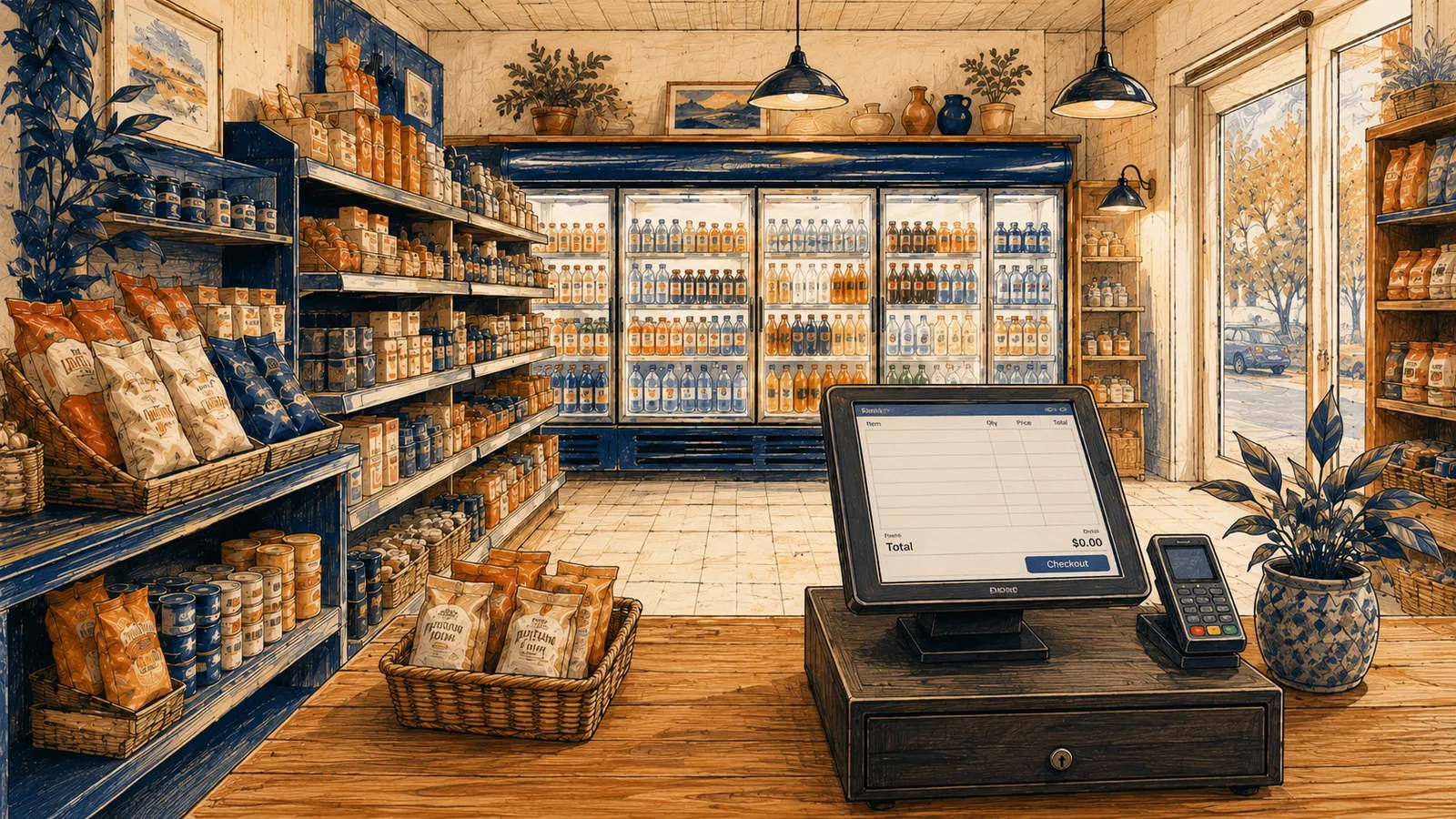
POS stands for point of sale. It is the register and the software that ring up sales in a store, the place where a customer’s purchase is recorded.
The point of sale is exactly what it sounds like, the spot where the sale happens and gets rung up. In a convenience store it is the register and the software behind it that records each item, takes the payment, and prints the receipt.
A good POS does more than total a sale. It connects to the pricebook, which is the master list of items and prices, and to the back office, the systems that handle the books and inventory. So when an item sells, the price comes from the pricebook automatically and the count and the sale flow back to the office without anyone retyping them.
That link is what keeps a store honest with itself. Sales, prices, and inventory all stay in step, so the numbers an operator reads at the end of the day reflect what actually sold. A POS that does not talk to the rest of the system leaves gaps where money quietly goes missing.
In useWhen the POS rings up a sale, the price comes straight from the pricebook and the inventory count drops by one, with no clerk keying anything.
Where the word comes from
POS is short for point of sale, plain words for the place where a sale is completed. The trade shortened it to the three letters.
See also Pricebook, NAXML, Reconciliation