
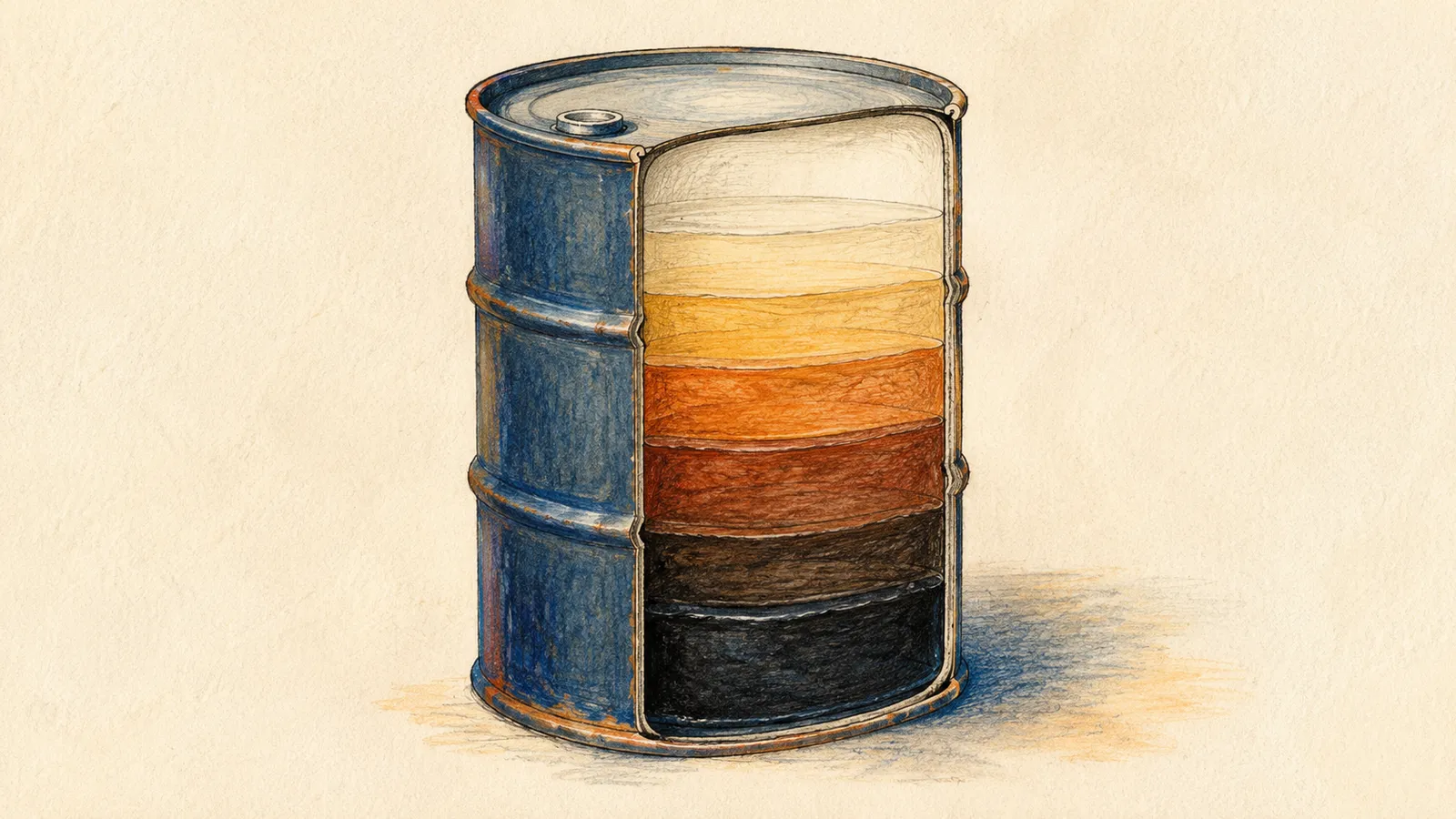
Jet fuel is a kerosene-based fuel made for aircraft turbine engines. It is a light, clean-burning product held to tight quality and safety standards.
Jet engines burn a fuel close to kerosene, the light product that sits between gasoline and diesel. Jet fuel is that product refined and controlled to a strict aviation spec, because a fuel problem in the air is far more serious than one on the ground.
It is sold mostly to airlines and airports rather than to the everyday retail market. The volumes are large and the buyers are commercial, so it moves by pipeline and bulk delivery into airport storage and fueling systems.
Quality control is everything with jet fuel. It must stay clean and free of water and contaminants, and it has to perform at the very cold temperatures of high altitude. Those demands set it apart from the diesel and gasoline a typical fuel marketer handles.
Jet fuel is also the base that sustainable aviation fuel is built to match. SAF is made from renewable sources but engineered to behave exactly like ordinary jet fuel, so the two can be blended and burned together.
In useA fuel supplier delivers jet fuel into the airport’s storage tanks, where it is tested for water and contaminants before it ever reaches an aircraft.
See also Kerosene, Sustainable aviation fuel (SAF), Marine fuel