
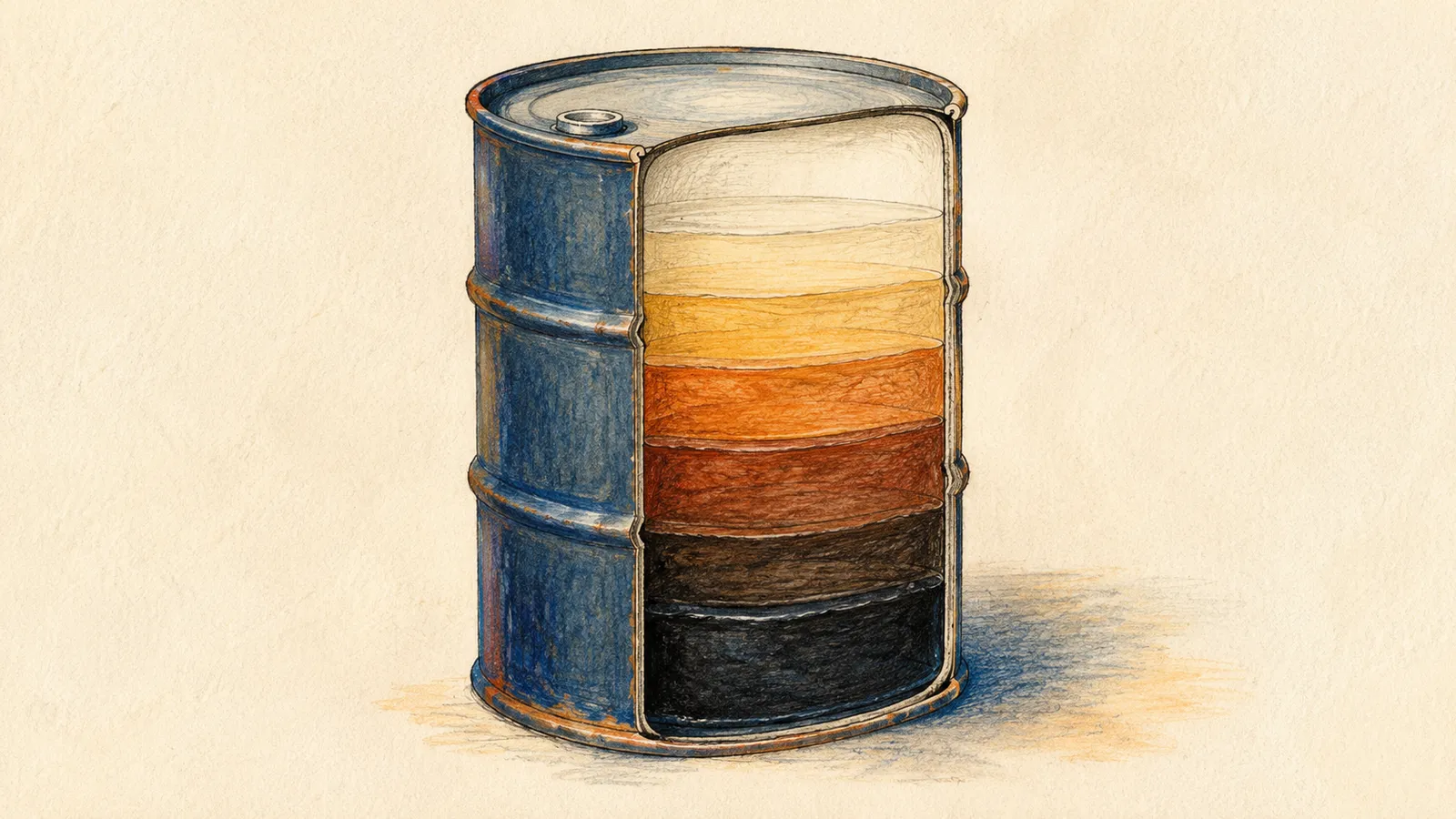
Marine fuel is the fuel that powers ships, also called bunker fuel. It ranges from light products much like diesel to heavy, thick oils burned by large ocean vessels.
Boats and ships need fuel just as trucks do, and marine fuel is the name for what they burn. It is not one product. It runs from a light distillate close to ordinary diesel, used by smaller and cleaner-running vessels, to a heavy, thick residual oil burned by big ocean-going ships.
The heavy grades are leftover-heavy products from refining, cheap but dirty, which is why large ships have long run on them. Rules on ship pollution have been tightening, pushing vessels toward cleaner, lighter marine fuels or toward cleanup equipment.
Marine fuel is often called bunker fuel, and the act of fueling a ship is called bunkering. It is sold and taxed under its own set of rules, separate from highway fuel, since ships are not driving on public roads.
For most inland fuel marketers marine fuel is a side trade at best, serving harbors, rivers, and lakes. It becomes a major business mainly at ports, where the volumes and the specialized handling are large.
In useA harbor supplier bunkers a cargo ship with heavy marine fuel, while the smaller tour boats nearby take a lighter, cleaner marine distillate.
See also Clear fuel, Dyed diesel, Kerosene