
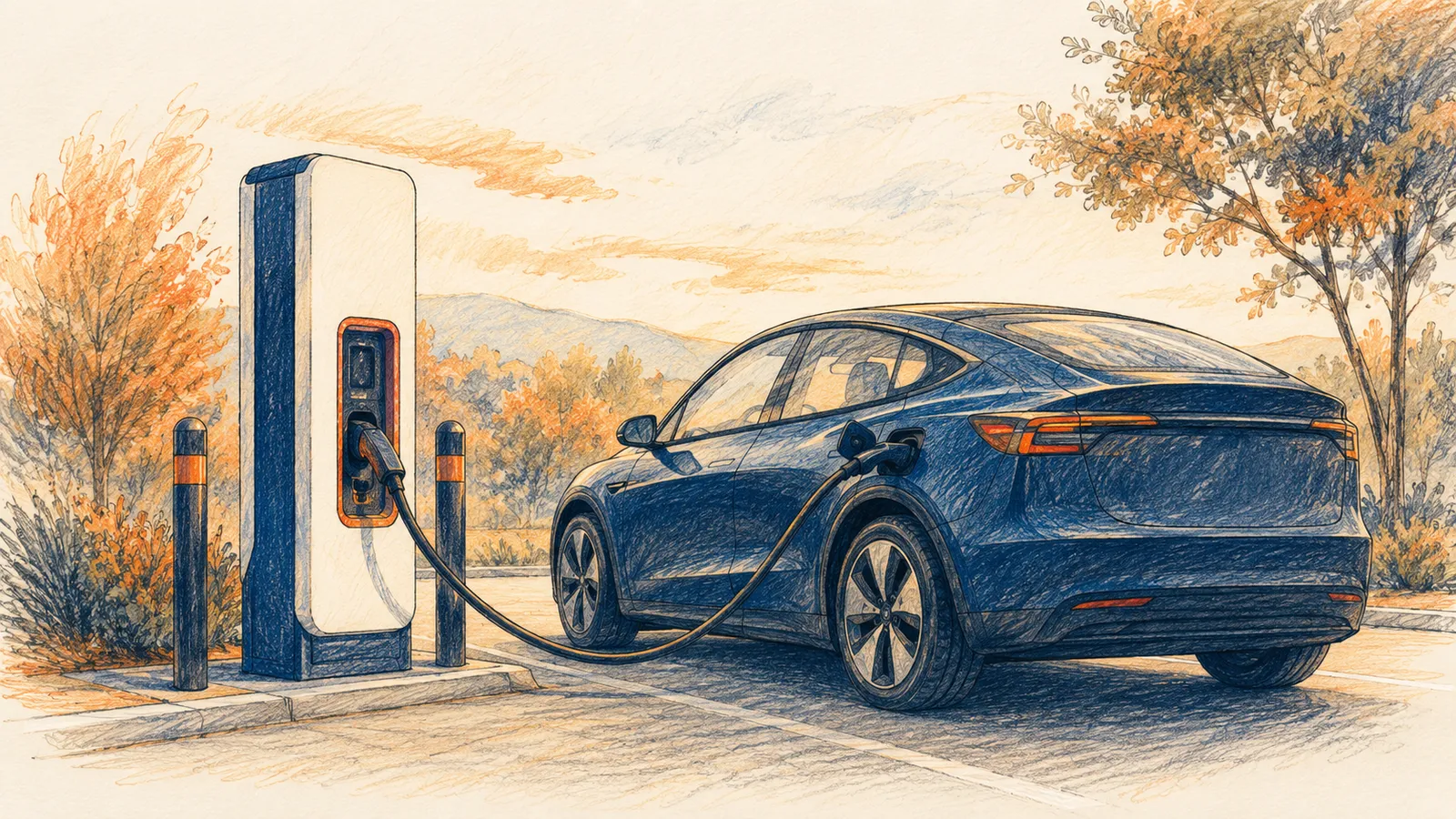
The energy economy ratio, or EER, is a factor that clean-fuel programs use to compare how far a vehicle goes on an alternative fuel against how far it would go on a gallon of gasoline or diesel.
Different fuels move a vehicle different distances for the same amount of energy. An electric motor, for instance, turns far more of its stored energy into motion than a gasoline engine does. If you compared fuels purely by their energy content, you would understate how far cleaner fuels actually carry a vehicle.
The energy economy ratio corrects for that. It is a multiplier that scales an alternative fuel against gasoline or diesel based on real-world efficiency. A fuel that moves a vehicle twice as far per unit of energy carries an EER that reflects it, so the comparison lands on miles driven rather than raw energy.
These ratios live inside clean-fuel and low-carbon programs, where regulators need one fair way to measure many fuels against a common baseline. The EER is the tool that puts electricity, hydrogen, natural gas, and liquid fuels on the same footing so credits and targets can be figured honestly.
In useUnder a clean-fuel program, electricity carries an energy economy ratio above one, crediting an electric vehicle for the extra miles it covers on the same energy a gasoline car would burn.
See also Gasoline gallon equivalent (GGE), Carbon intensity, Electric vehicle (EV)