
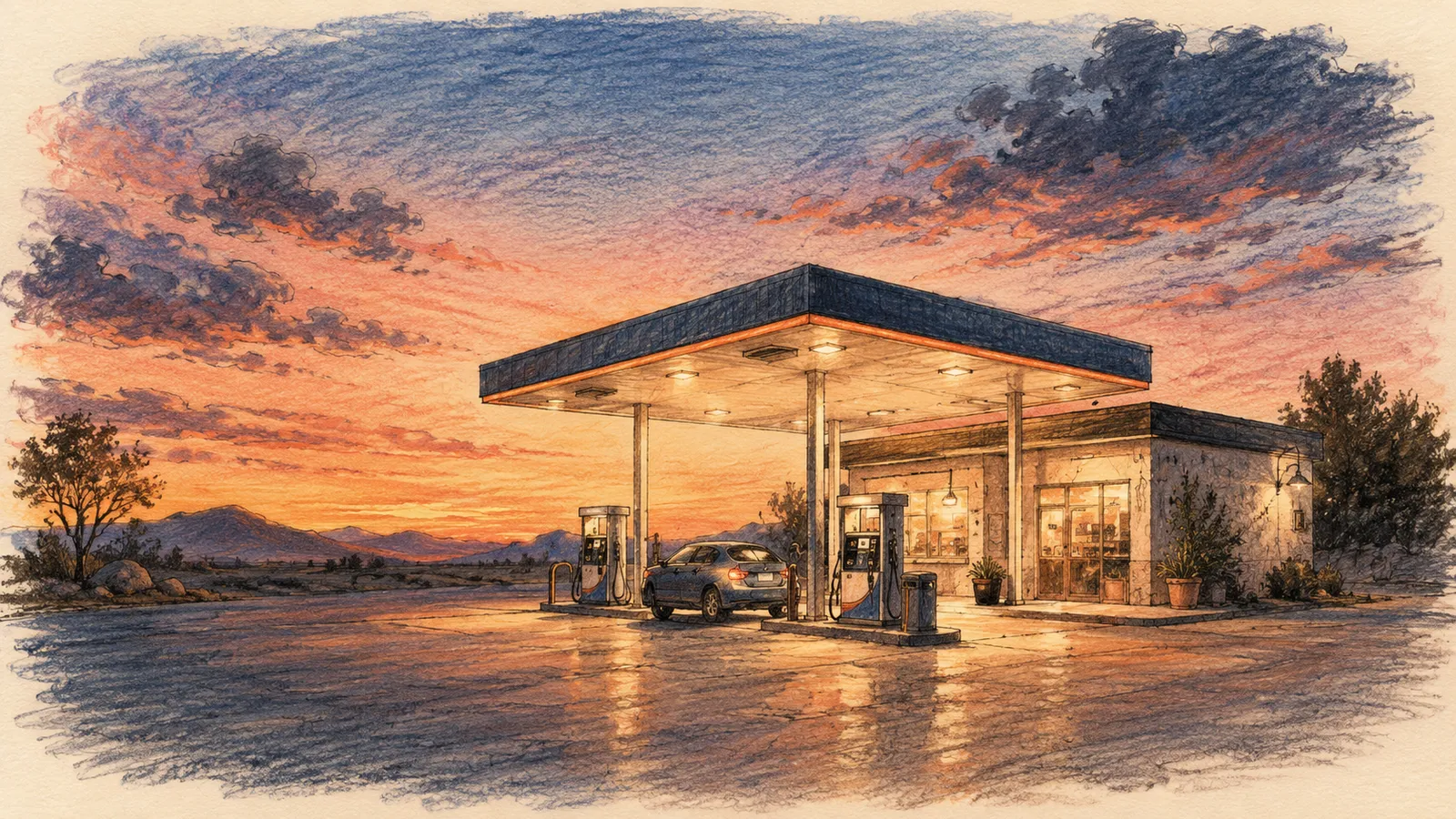
Ask a jobber what business they are in and they will say fuel. Look at the deed and the lease file, and a good number of them are also landlords. They own the lot the station sits on, or they hold a long lease on it, and they rent the site out to the dealer who runs the pumps. The fuel is what they talk about. The dirt under the fuel is half of what they own. Most fuel software has plenty to say about the gallons and almost nothing to say about the ground, and that gap costs operators real money every year.
Why a fuel operator ends up a landlord
It happens by degrees. You supply a station, the owner wants out, and buying the property keeps your gallons on it. Or a good corner comes up and you grab it before a competitor does. Or you sign a long ground lease, put in the canopy and the tanks, and sublease the finished site to an operator. A ground lease is a long rental of bare land where you build and own the improvements on top. Either way you wake up holding property, and the property has a tenant, and the tenant pays rent. A dealer who runs your site is your customer for fuel and your tenant for the real estate at the same time. Those are two relationships with the same person, and they live in two different files that rarely talk to each other.
The rent roll is a number you should know cold
A rent roll is a simple list. Every property you hold, who occupies it, what they pay, and when. Add it up and you have what your real estate brings in each month, separate from a drop of fuel. Plenty of operators cannot pull that number in under an hour, because it lives in a binder, a spreadsheet, and somebody's memory. That is a problem. Rent is steady income that does not swing with the rack, and it is the part of the business a buyer looks at hardest when you go to sell. If you cannot show a clean rent roll, you are leaving value on the table the day you most want it.
Renewals and escalations are where the money quietly leaks
Here is the one that gets people. A lease has dates in it, and the dates cost money when they slip past. A renewal date is the deadline to extend the lease or let it lapse, and missing it can hand a tenant a cheap holdover or leave you scrambling. A rent escalation is a built-in raise, often a few percent a year or a step every five years, and it only happens if somebody actually raises the rent on schedule. Miss an escalation and you charge last year's rent for another year. Nobody sends you a bill for the money you failed to collect, so it never shows up as a loss. It just is not there. One skipped escalation on a single site can run into thousands of dollars a year, every year, until someone notices. That is pure margin gone, and it went without a fight. The fix is dull and it works: every lease date sits somewhere that warns you well before it lands, so the raise goes out on time and the renewal gets decided on purpose instead of by accident.
CAM, taxes, and insurance: who actually pays
Owning the dirt means owning the bills that come with it, unless the lease pushes them to the tenant. Common area maintenance, or CAM, is the cost of keeping the shared parts of a property up: the lot, the lights, the landscaping, the snow plowing. On a lot of fuel leases the tenant is supposed to cover CAM, the property taxes, and the insurance, on top of base rent. People call that a net lease. The catch is that somebody has to track those costs, bill them to the tenant, and chase the reimbursement. Property tax bills arrive once or twice a year and have to land in the right account. Insurance has to stay current on a site you do not personally walk every day. When all of this lives loose, the operator eats costs the lease says the tenant owes, and never knows it.
The tanks ride with the real estate
Fuel property comes with something a strip mall does not: tanks in the ground. When you own or lease a station, you usually own or share the underground storage tank obligations too, and those follow the dirt, not the fuel. The EPA rules want regular walkthroughs, release testing, operator training, and records that prove all of it. The environmental history of a parcel, old leaks, cleanups, monitoring, sits with the property forever and shows up the moment anyone tries to buy, sell, or finance it. So the real estate file and the tank compliance file are really describing the same patch of ground. Keeping them apart is how a clean-looking deal blows up at closing over a tank nobody flagged.
Three views of one site
Step back and the point is simple. For any station you hold, there is the supply side (the gallons you deliver), the dealer relationship (your customer at the pump), and the lease (your tenant on the property). Those are three views of the exact same site. Run them in three disconnected systems and you get the gaps this article is about: the escalation nobody raised, the CAM nobody billed, the renewal that sailed past, the tank record that did not match the deed. Put them in one place and a single screen tells you everything that site owes you, fuel and rent both. When you go to buy or sell a jobber business, that single clean picture is a large part of what the company is worth.
Where the software fits
This is the corner of the business spreadsheets handle worst, because the cost of a miss is invisible and the dates are easy to forget. FastDragon is built in modules, and the real estate piece is one of them: a place to hold every property and lease, run the rent roll, and flag renewal and escalation dates before they pass, sitting right next to the fuel supply and the agent and dealer settlements for the same site. You switch it on if you own or lease property and leave it off if you do not. The aim is plain. The dirt you own should make you money on purpose, not slip a few thousand dollars a year because a date went by while everyone was watching the gallons.