
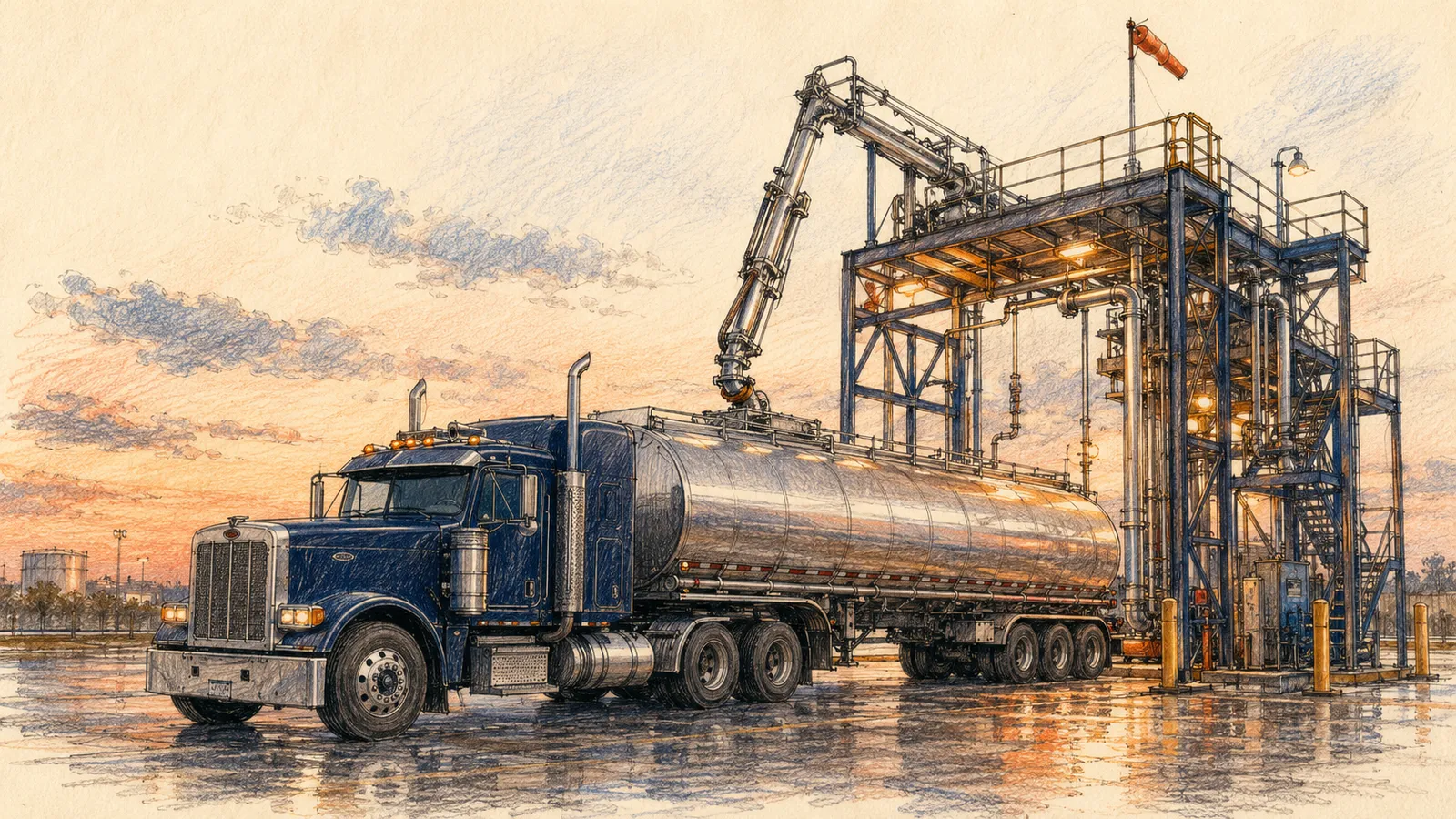
A fuel jobber buys fuel by the truckload at a terminal and sells it on to the people who pump it or burn it. Gas stations. Trucking fleets. Farms, marinas, factories, road crews. The names for the job pile up and trip people up: jobber, petroleum marketer, fuel wholesaler, distributor, reseller. For the most part they all describe the same spot in the chain, the link between the refinery and the nozzle. If you are weighing whether to step into it, the first useful thing is to see the work plainly, because a good share of what gets written about petroleum marketing is really about a different job.
The job you are probably not picturing
Search how to become a petroleum marketer and a lot of what comes back is about oil trading. Geneva. Trafigura, Glencore, Vitol. Screens full of cargoes and hedges, paper barrels moving around the world. That is a real career and a hard one to break into, and it is a different thing from this. A trader moves product and price risk on a desk. A jobber owns trucks, signs a supply contract, and delivers diesel to the same forty or four hundred customers in a region, month after month. One is finance. The other is a distribution business you can own and run. Most people who say they want into fuel, and have a region or a family business in mind, are after the second one.
What the work actually is
Strip it down and a jobber does five things on repeat. You lift fuel at the rack, the wholesale price posted at the terminal that day. You haul it. You drop it at your accounts. You bill it, with the right taxes on every gallon. And you carry the money until the customer pays. The margin on all that motion is thin, often a few cents a gallon, so you make a living on volume and steadiness instead of markup. Part of the job is logistics. Part of it is lending. A larger part than anyone expects is tax filing. Going in with that picture saves a lot of grief later.
The ways in, and what each one costs you
There are a few honest doors into the business, and they ask very different things of you.
Buy an existing jobbership. The fastest way in. You inherit supply contracts, a customer book, trucks, drivers, and the brand relationships, all of it already turning. You also pay for all of it, which is where you and a lender have a long conversation. The numbers in a fuel deal look strange to a banker who has never seen one, so it pays to walk in able to explain the working-capital swing before they get nervous about it.
Build one from scratch. You line up your own supply, get licensed and bonded, buy or lease trucks, and win customers one account at a time. This is the slow road and the one that asks the most of you. It is also yours from the ground up, with no prior owner's habits to unwind.
Run as a commission agent. The lightest way to start. Under a commission marketer program from a major brand or a marketing group, you operate branded stations or routes while the company often owns the fuel and sets the pump price, and you earn a margin or commission for running the site well. The up-front cost is low, which is why it is the on-ramp many operators use before they own product outright. It is worth understanding exactly what a commissioned agent is and where the money comes from before you sign one of these.
Take the corporate seat. If you would rather learn the trade on someone else's balance sheet, hire on as a territory manager or wholesale fuel sales rep at an established marketer. A salary in place of the risk, and a paid education in how the business really runs. Plenty of owners started here, learned the trade for a few years, and left to buy their own book.
Lock down supply first
You cannot sell fuel you cannot get, so supply is the contract that comes before everything else. The first fork is branded or unbranded. A branded supply agreement with a refiner or major puts a flag over your sites, with image standards and rules to match, and gives you brand support and a steadier allocation. Unbranded fuel from an independent terminal is cheaper and more flexible, with no flag and no one dictating how the canopy should look, though you shop the rack yourself and ride the spot market. Either way the price moves every day, your supplier extends you credit on six-figure loads based on your balance sheet, and in a tight market the question stops being price and becomes whether you can get product at all. The relationship with the people who allocate that fuel is an asset, and you build it long before you need a favor. How you then price it down to your own customers, as a delivered number off your real cost, is its own skill.
Get licensed, and treat the tax money as money that is not yours
This is the part that catches newcomers flat. To deal in taxable fuel you register with the IRS, which issues activity letters on Form 637. You take a motor fuel tax license in every state you sell or move fuel in, and from that point you are the one who collects the fuel tax and sends it to the state. Most states want a motor fuel tax bond, a surety bond that guarantees you actually remit what you collect. If your trucks cross state lines you file under IFTA. If you own retail sites with tanks in the ground, you pick up underground storage tank rules and the environmental record-keeping that rides with them. The thing to burn into your head from day one: the fuel tax flowing through your account is far larger than your margin, and it is not yours. It belongs to the state. Spending it because it is sitting in the bank is one of the oldest ways a jobber goes under.
Buy or rent the iron
Moving fuel takes equipment. Transport trailers haul roughly 7,500 gallons and up for the runs between terminal and bulk plant. Bobtails do the smaller local drops to stations and farms. Early on you can lean on common carriers and skip owning a fleet at all, which keeps the capital light while you prove out the customer base. If you want to hold product you add a bulk plant or leased storage at a terminal. A truck is one of the few moves in this business you cannot quietly undo, since the lease or the note runs whether the gallons show up or not, so be slow and honest about when to add one.
Learn the money before you fall for the gallons
The volume is seductive. A jobber can move millions of gallons and still run a careful household, because the margin underneath all that fuel is a few cents. You tie up a small fortune in inventory and receivables to earn it. Your borrowing rises and falls with the price of fuel, since the same gallons cost more when the rack jumps. Your commercial customers want thirty days to pay while your supplier wants ten, so you finance the gap in between. And one large account going bad can swallow a year of profit, which makes credit discipline and a price you can live with for years matter more than landing the biggest logo. Respect the math early and the gallons take care of themselves.
It is a relationship trade, learned by doing
Very little of this comes from a classroom. A degree in business or finance will not hurt, and it helps on the lending and the numbers, but the trade itself is learned on the job and held together by trust. Refiners hand allocation and good terms to operators they have watched deliver. Dealers stay with the jobber who answers the phone at five in the morning when the cold snaps and every tank runs low at once, which is exactly when good dispatch earns its keep. If you are serious, find a mentor, work a season inside an existing marketer, and get your hands on the real work before you bet your own money on it. The people who last in this business are the ones who learned the unglamorous parts cold.
The part nobody warns you about
Here is what the brochures skip. Every load you lift is a bill of lading that has to become an invoice with the right freight, surcharges, and fuel tax on it, the same day, before the margin leaks out. Every month is a fuel tax return in every state you touched. Every commission site is a settlement of fuel sales, card receipts, rent, and commission boiled down to one net number. Every gallon has a cost and a margin you ought to know before the truck rolls, not three weeks later at the close. New jobbers run all of it on spreadsheets and a sharp bookkeeper, and that holds right up until the volume makes a single keying error expensive. The operators who last tend to put the back office on real software early, while the business is still small enough to set it up in the calm. It is the least glamorous decision on this whole list. It is also the one that lets you sleep during a price spike.