
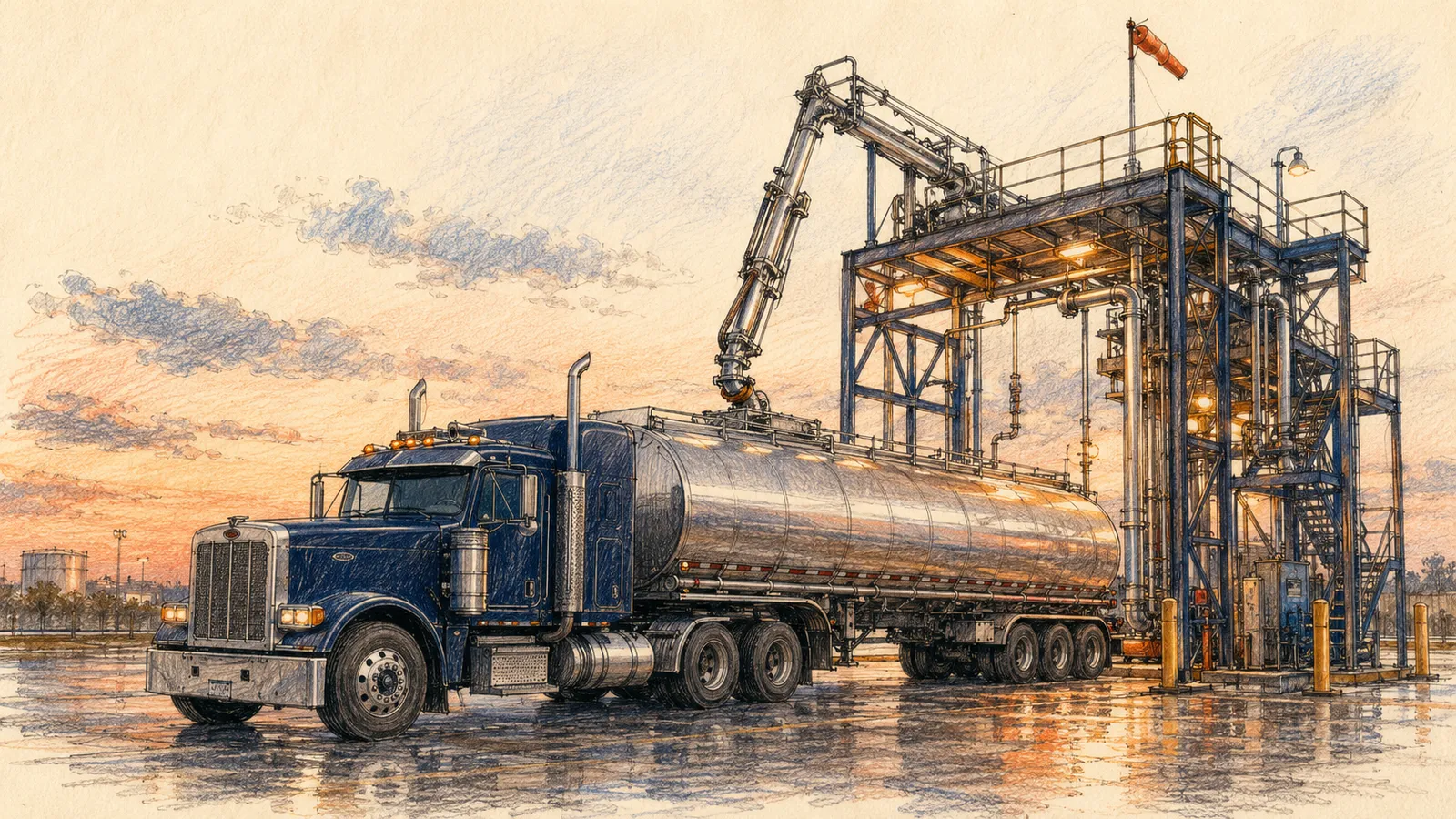
Here is something that surprises people the first time they hear it. The branded gasoline at the corner station and the unbranded gasoline a mile down the road may have come out of the same refinery, traveled the same pipeline, and sat in the same tank at the same terminal. Fuel does not become a brand at the refinery. It becomes one in the last mile, by the gallon, at the loading rack, a few minutes before the truck pulls away.
The base fuel is mostly shared
Refineries make gasoline and diesel to common published specifications, so a gallon of regular from one plant is, at the base level, interchangeable with a gallon of regular from another. That is what lets the system work the way it does. Product from many refineries gets pooled and shipped through shared pipelines, and companies trade supply through exchange agreements so each can sell in regions where it has no refinery of its own. The gallon riding in a branded truck may well have been refined by a competitor. Follow the path from terminal to pump and you find a commodity that meets the same specs no matter whose sign ends up over it.
The brand goes in at the terminal
Branding happens as close to the customer as the supply chain allows, and that means the terminal. As a truck loads at the rack, a metered dose of the refiner's proprietary additive package is injected into the stream of fuel going into the tank. That package, mostly detergents and performance chemicals, is what turns a fungible gallon into a branded one. The base gasoline was shared; the additive recipe and the flag are what the brand actually owns. A truck can pull up to the same loading rack, take branded fuel with the additive on one load and plain unbranded fuel on the next, and roll out carrying two different products that started as the same fuel.
What the flag buys the operator
Carrying a brand gives a station or a jobber things the bare commodity gallon does not. Customers recognize the name and trust that the fuel is reliable and clean, the national marketing pulls traffic off the highway, and an established brand makes it easier to introduce a new grade or product without starting from zero on trust. For plenty of sites that recognition is worth a few cents at the pump, which is the whole reason the branded supply model exists.
What the flag costs
The brand is not a gift. Flying it means living by its rules. There are image standards for the canopy and the site, supply commitments to meet, and pricing arrangements such as dealer tank wagon that the refiner controls rather than you. You trade away some freedom and usually a little margin in exchange for the recognition and the steadier supply. Whether that trade pays depends on your location, your volume, and how much the brand is worth to the drivers going past your door.
Unbranded, and the independents who build their own brand
Unbranded fuel is the same base product without the additive package and the flag, sold on price. The old notion that unbranded meant lower quality has not been true for a long time. It meets the same specifications and runs in any engine, and these days a lot of unbranded fuel sells at large, sharp convenience chains with first-rate sites. Some independents have grown strong enough to inject their own additive and build a brand of their own, doing exactly what the majors do. To the refiner that supplies them, that fuel still leaves as an unbranded sale. The brand, once again, is the additive and the name, added after the fuel changed hands.
What it means for your records
For an operator the practical part is that branded and unbranded can come off the same terminal on the same day, at different costs, under different contracts. A clean operation keeps straight which gallons carry which brand, what the additive added to the cost, and which agreement governs each load, because all of that has to land correctly on the invoice and in the books. When the brand is something you inject at the rack, your records are the only place the distinction stays honest. Get that right and the flag over the canopy means exactly what your customers think it does.